
What is pyrite?
The problem begins beneath the concrete
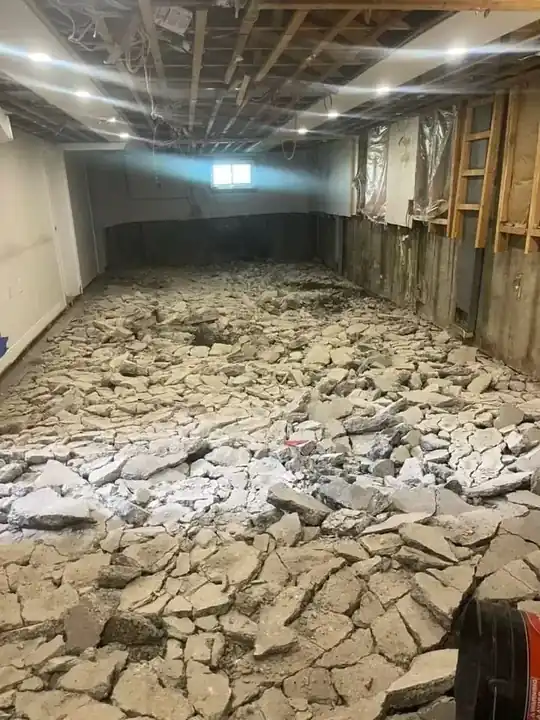
Pyrite is an iron sulfide mineral present in some crushed stone used in Quebec as fill under basement and garage slabs. With moisture and oxygen it reacts, the fill swells and pushes the slab up.
Pyrite can’t be diagnosed from cracks alone — the test has to reach the fill under the slab.
Don’t guess about pyrite. Investigate the materials beneath your concrete.
Signs that justify a test
- A raised section of floor
- Widening or star-pattern cracks
- An uneven or displaced floor
- Damaged finishes or partitions
- Doors that start to stick
- Movement that gets worse
Settlement and frost cause similar signs — that’s exactly why the test matters.
Professional inspection & sampling
From the floor to the laboratory report
Inspection
The floor, the cracks, the movement and the history of the house.
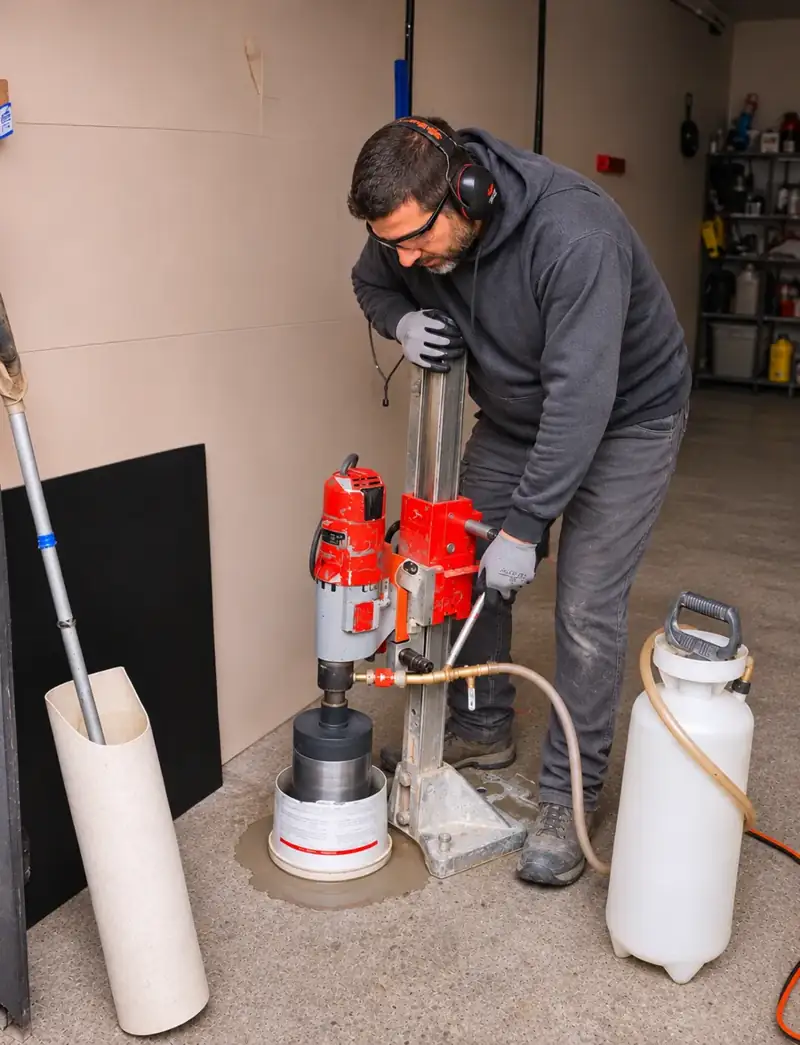
Slab access
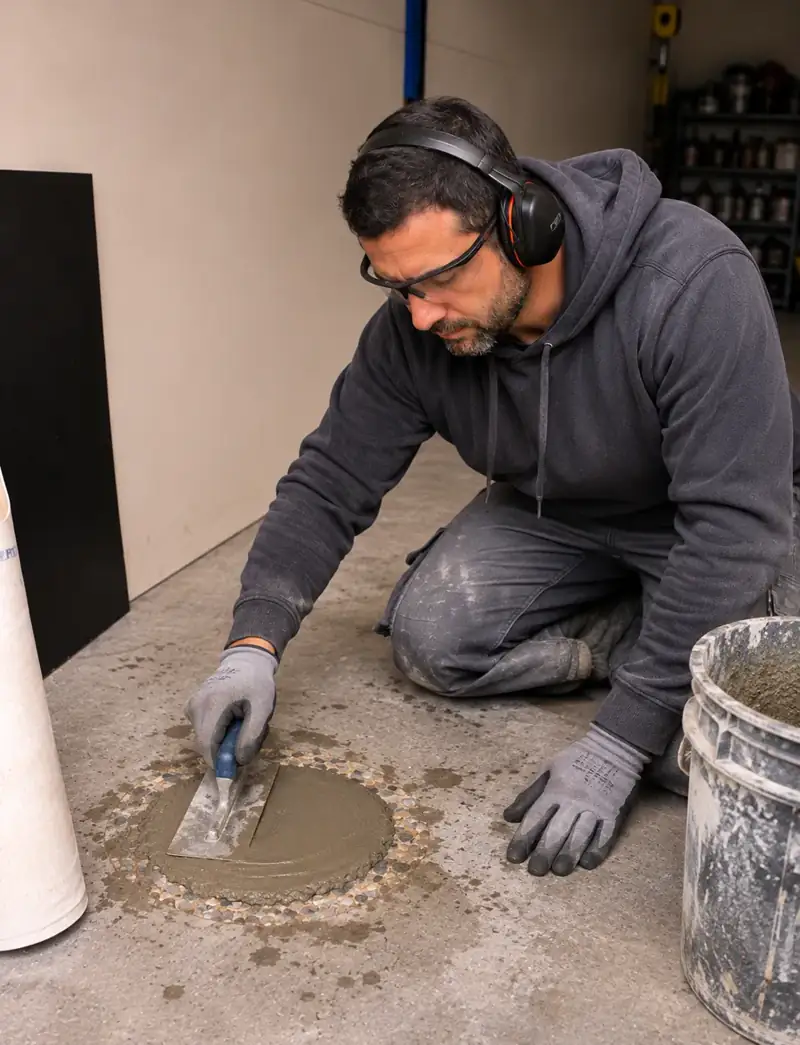
A clean core opening through the concrete to reach the fill.
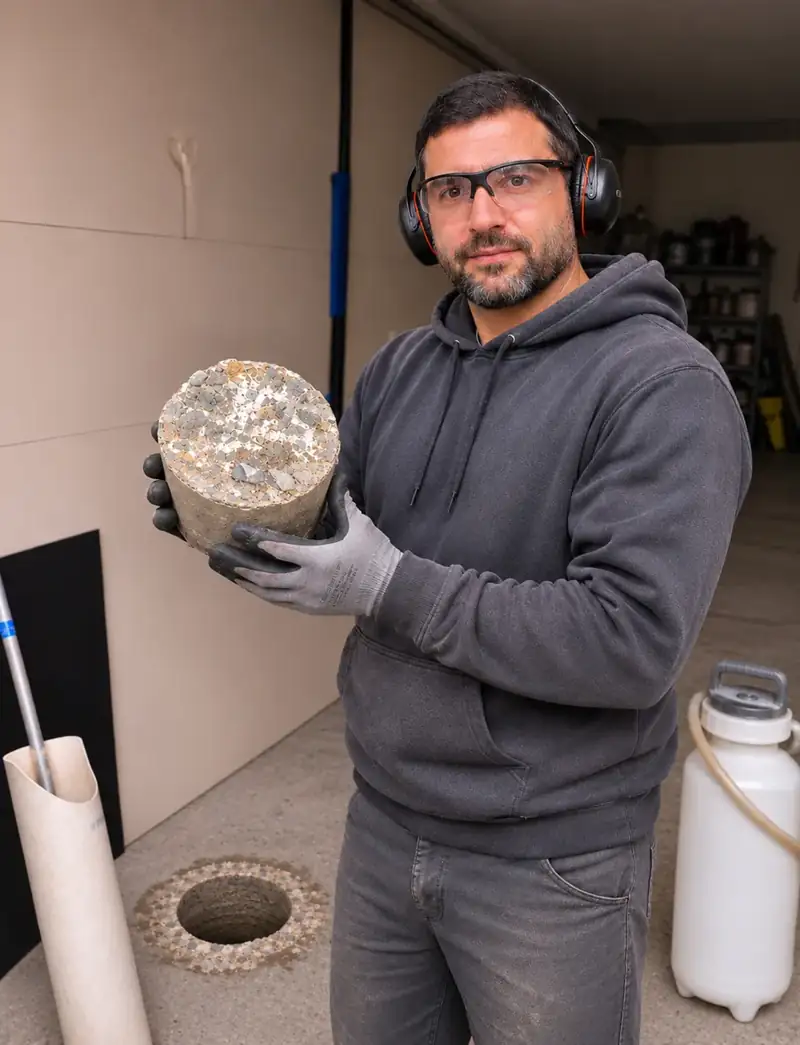
Backfill sampling
Representative samples taken to the laboratory’s requirements.
Independent lab analysis
Samples tested by a specialized laboratory.
Laboratory report
Documented results and their interpretation.
Results review
We go through the report with you and explain the options.
How we work
Inspection. Sampling. Laboratory analysis. Results.
- 01ConsultationProperty, history, damage, purpose.
- 02Sampling planBasement and/or garage, sampling points.
- 03Slab accessA clean opening through the concrete.
- 04Backfill samplingRepresentative samples, documented.
- 05Laboratory analysisBy a specialized independent lab.
- 06Report & explanationWe go through the findings with you.
- 07Next stepsOnly if the results call for it.
The history of pyrite in Quebec
A problem serious enough for government intervention
Most affected buildings were built in the 1980s, when large volumes of crushed-stone fill went under new slabs. Today, pyrite problems are documented in 91 municipalities of Greater Montreal, with the highest risk on the South Shore.
The year of construction is a reason to investigate — not proof of pyrite.
- 1985 — Swelling fill identified in the Montreal region — first thought to be isolated cases.
- 1997 — The Comité technique québécois on pyrite swelling is created.
- 1998 — Media coverage reveals how widespread the problem is.
- 1999 — From April, the industry voluntarily applies CTQ-M100 to certify non-swelling fill.
- 2001–2011 — A Société d’habitation du Québec program helps owners of damaged homes.
Why damage can appear decades later
No visible cracks doesn’t mean the fill was tested
Pyrite oxidizes and forms gypsum, which takes up roughly twice the volume — the fill swells slowly. According to the ACQC, damage can appear about ten years after construction, sometimes only after 15, 20 or more than 25 years.
The fill under a garage can differ from the basement — a separate sampling point is often needed.
Understanding the results
IPPG and the CTQ-M200 protocol
The lab may report the IPPG — Petrographic Swelling Potential Index (PEPI): how likely the fill is to swell. It measures the material’s potential, not damage already done.
CTQ-M200 is the Quebec protocol for investigating pyrite in existing homes. The OACIQ notes that, though voluntary, it is currently the only methodology recognized by the authorities.
Our difference
From testing to complete slab replacement
Buyers, sellers, owners and renovators get the information they need. If the results and further assessment show the fill must go, we do the work: demolition, excavation, certified aggregate, compaction, vapor barrier, reinforcement and a new slab.
The results decide whether repairs are needed — not the contractor.
Professional pyrite testing. Independent laboratory results. Complete remediation solutions.
Why Delta
Why choose Delta Waterproofing
Pyrite test cost in Montreal
Depends on the number of samples, the slab areas to test (basement, garage), access and the laboratory analysis required. You get the price before the visit.
Get the priceFAQ
Pyrite testing questions
Related services
How do I know if my house has pyrite?
Cracks can’t confirm it — only sampling and lab analysis of the fill can.
Which homes are most associated with pyrite?
Mostly 1980s homes in the Montreal region and South Shore — but not every one, and other periods too.
Can a house have pyrite without visible damage?
Yes — damage can take ten, twenty or more years to appear.
What are IPPG and CTQ-M200?
IPPG is the fill’s swelling potential index; CTQ-M200 is the Quebec investigation protocol.
Do you test basement and garage floors?
Yes — often with a separate sampling point for each.
Does a positive test mean immediate repairs?
Not necessarily — results are read with the building’s condition.
Do you also do pyrite removal?
Yes — removal and slab replacement are part of our concrete services.
Free on-site estimate
Cracked or heaving floor? Buying a house?
Book a pyrite test — we organize the sampling and the independent lab analysis.
RBQ 5762-6723-01 · $5M liability insurance