
Warning signs
Signs you may need interior waterproofing
Our free on-site estimate finds where the water is coming from and tells you whether interior drainage, exterior waterproofing, crack injection — or a combination — is the right fix.
- 01 Water entering at the joint between the wall and the floor
- 02 Water seeping up through the basement floor or floor cracks
- 03 Puddles after heavy rain or snowmelt
- 04 A high water table — the basement floods every spring
- 05 Damp walls, musty smell or mould at the bottom of finished walls
- 06 No access to dig outside: driveway, neighbour, deck, attached house
- 07 An old, clogged or missing exterior drain that can't be replaced from outside
- 08 Peeling paint, stains or white mineral deposits at the bottom of the walls
How it works
Relieve the pressure from the inside
When the soil around and under your house is saturated, water builds up pressure — hydrostatic pressure — against the foundation walls and under the basement slab. It pushes through cracks, through the joint between the wall and the floor, and through the slab itself.
An interior drainage system relieves that pressure. A French drain is installed in a trench along the footing, below the floor. Water is collected there, flows by gravity to a sump pit and is pumped out of the house.
The result: water no longer builds up under the slab or against the walls — it is captured and removed before it reaches your living space.
Water coming up through the floor, seeping at the base of the walls or pooling after every heavy rain damages finishes, feeds mould and keeps the basement unusable. We install interior systems in homes, duplexes and triplexes across Greater Montreal — including finished basements and homes with no access outside.
One complete system
Choosing the right system
When interior waterproofing is the right choice
It is the best solution when there is no access outside, water comes up through the floor, the water table is high, it is winter, or you want to keep your landscaping. It manages water once it reaches the foundation — when the walls themselves are deteriorating, exterior waterproofing is the better long-term fix, and some homes need both.
| Interior drainage system | Exterior waterproofing | |
|---|---|---|
| What it does | Captures water at the footing and under the slab, and pumps it out | Keeps water from getting through the foundation wall |
| Where the work happens | Inside the basement | Outside, by excavation |
| Season | All year, including winter | When the ground is not frozen |
| Landscaping | Not touched | Excavation along the walls |
| Warranty | 10 years, transferable | 15 years, transferable |
We install both, so we recommend what your foundation actually needs. See exterior waterproofing
Scope of work
Our 10-step interior waterproofing process
An interior system only works if the wall, the trench, the slope, the membrane and the pumps are done right. Here is how we install it.
-
01
Inspection & assessment
We find where the water comes in — floor-wall joint, cracks, slab or a failed exterior drain — and plan the drain layout, the pit location and the discharge.
-
02
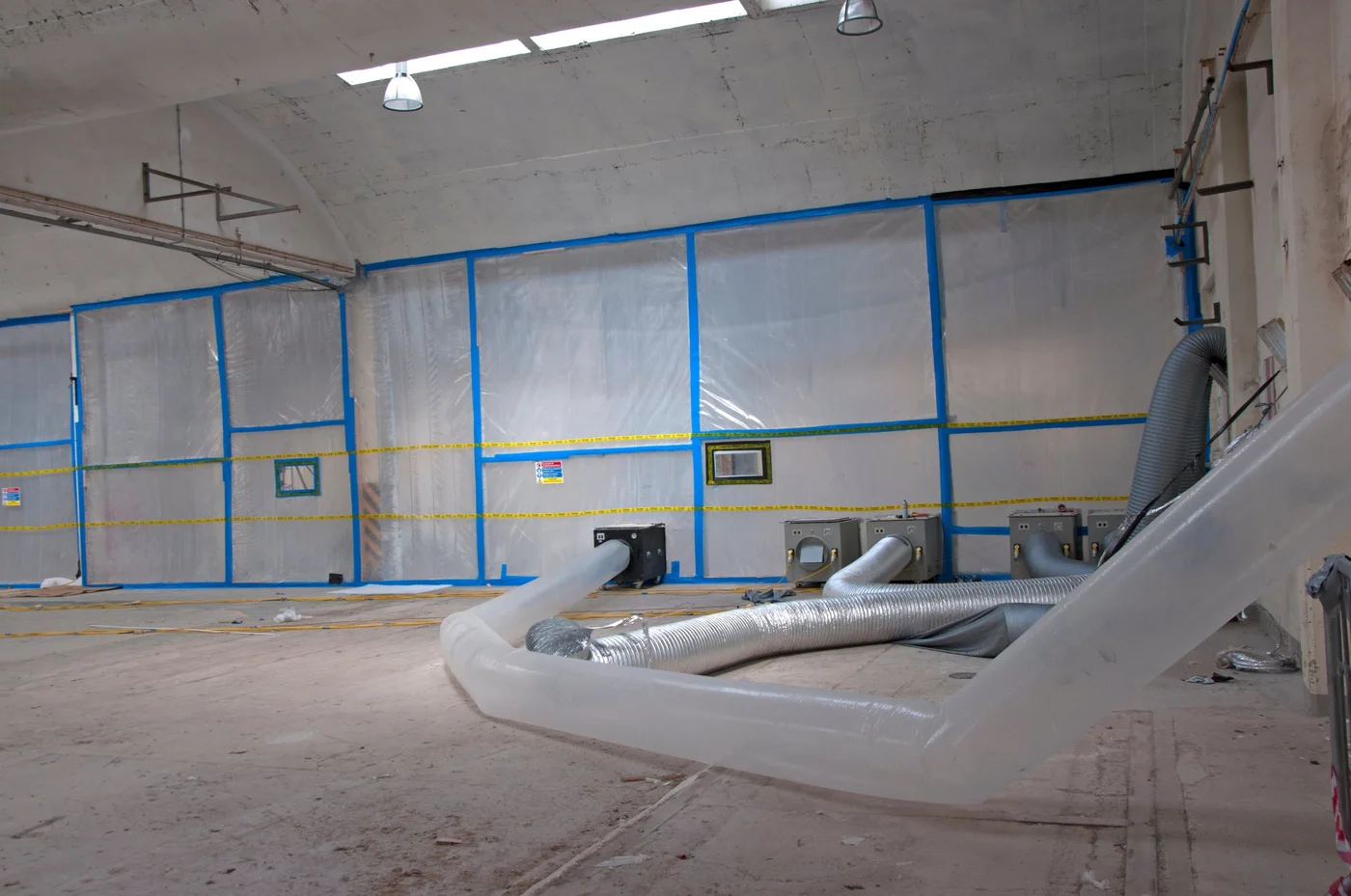
Dust-controlled preparation
One or two temporary walls seal off the work zone; an air-filtration unit keeps it under negative pressure; every tool runs on a HEPA vacuum.
-
03
Cutting the slab
We saw-cut the concrete floor along the perimeter walls and remove a strip of slab.
-
04
Trench beside the footing
The trench is dug beside the footing — never below it — so the foundation is not undermined.
-
05
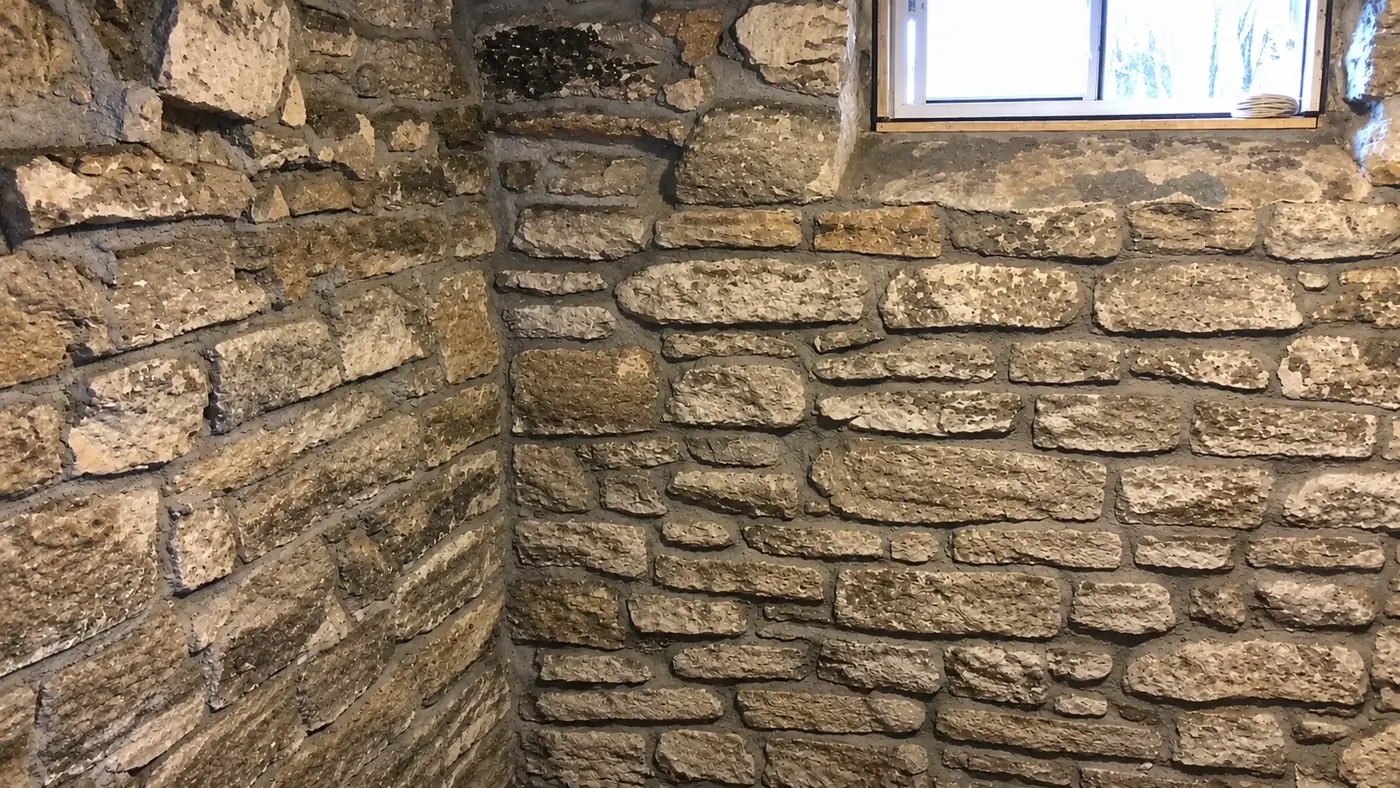
Restoring the wall
Concrete: holes, cracks and joints restored with hybrid epoxy-polyurethane resins and a rubberized membrane. Stone: mortar repointed and weak sections rebuilt.
-
06
Crystalline treatment
Concrete walls are sealed from within with a crystalline treatment — applied by certified applicators.
-
07
Interior French drain
Perforated pipe in filter fabric, laid in clean stone with a constant slope to the sump pit.
-
08
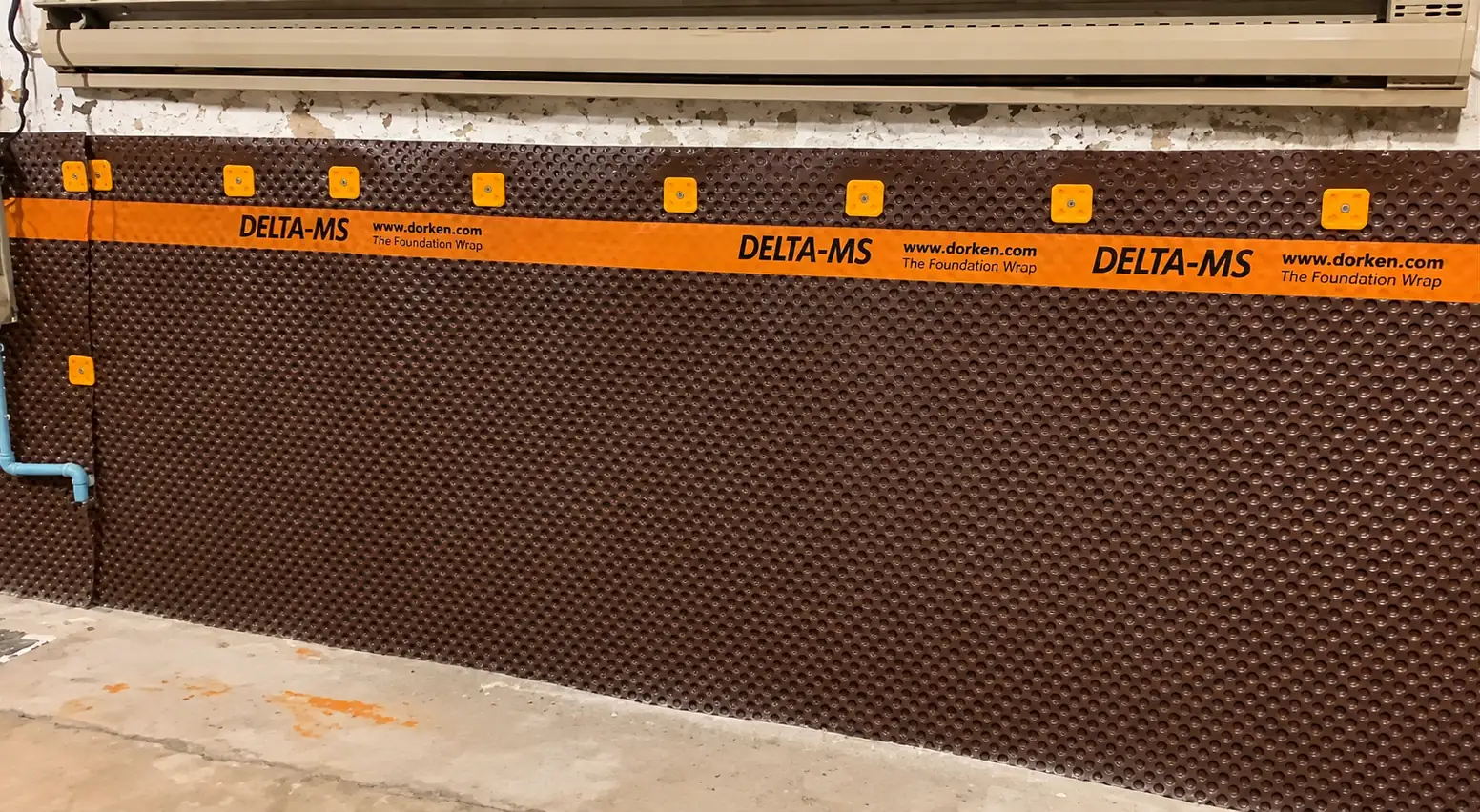
Delta-MS membrane
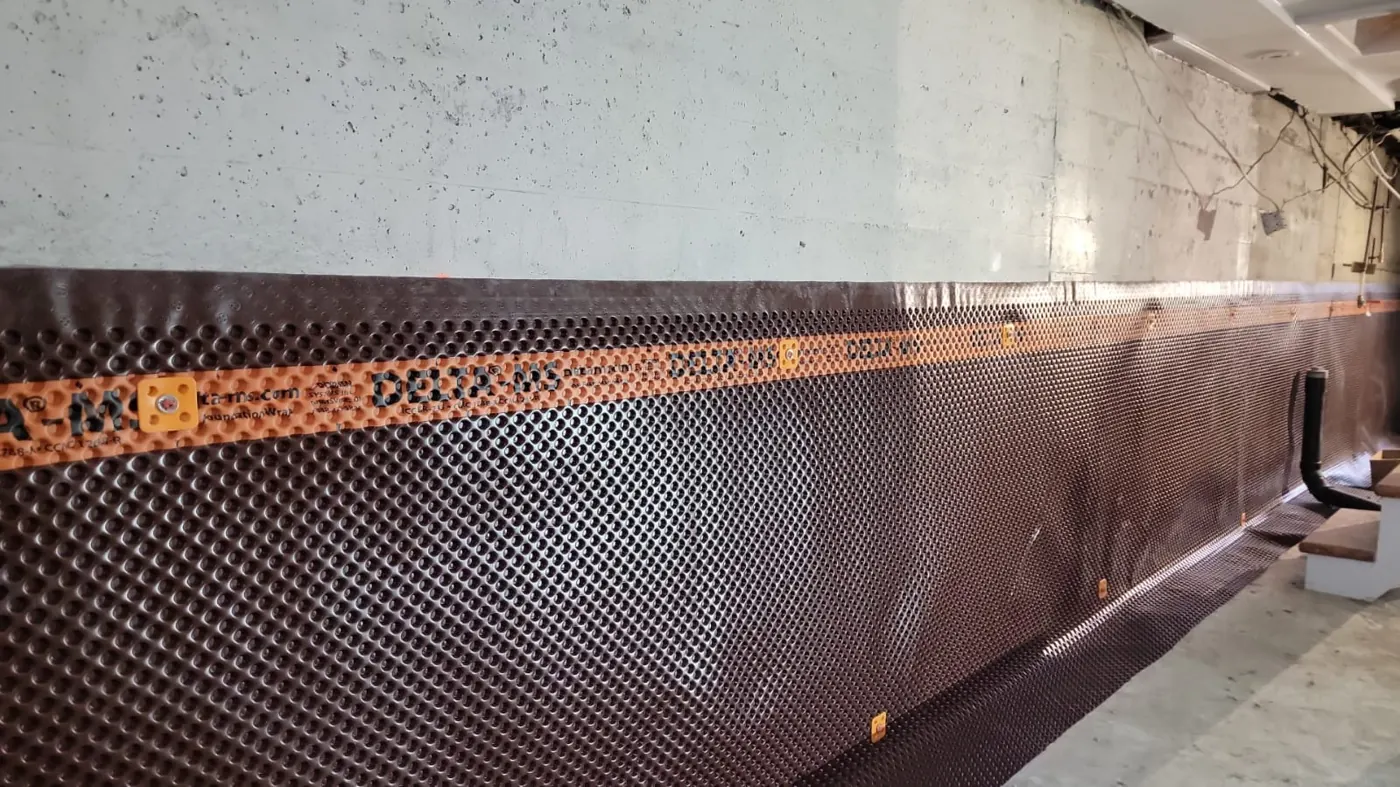
The dimpled membrane goes over the wall and down into the trench, guiding any new seepage into the drain.
-
09
Delta TripleGuard™ Pump System
Three pumps, two power sources, two ways out. A Zoeller cast-iron primary pump discharges to the sewer line. Set higher, a self-testing Pro Series combination unit — a second pump plus a battery-backup pump — discharges outside if the water keeps rising, the sewer is full or the power goes out.
-
10
New concrete & clean-up
The floor is closed flush with new concrete and the basement is left clean and ready for finishing.
The second line of defence
Why a Delta-MS membrane on the inside of the wall
A foundation keeps moving with frost, settling and the seasons. Over the years, a new hairline crack, a tie-hole or a joint can open. The dimpled Delta-MS membrane stands a few millimetres off the wall and creates a continuous air gap — a built-in drainage channel. If water ever gets through again:
- 1Water comes through a new crack, hole or joint in the wall.
- 2It meets the membrane — not your drywall — and runs down behind it.
- 3It drops straight into the interior French drain.
- 4The drain carries it, with a constant slope, to the sump pit.
- 5The pumps send it out — to the sewer line, or outside if the sewer is full.
The water never reaches your floor, walls or finishes. And because moisture stays behind the membrane, drywall and insulation can be installed in front of it — not against a damp foundation wall.
Certified crystalline waterproofing applicators
Crystalline waterproofing — sealing concrete from within
Concrete looks solid, but it is full of microscopic pores, capillaries and hairline cracks. Under hydrostatic pressure, water travels through them — which is why a wall can be damp without a visible crack. A crystalline treatment works inside the concrete instead of on its surface.
- 01It penetratesApplied as a slurry on a damp wall, the active chemicals migrate into the concrete through the water in its pores.
- 02It crystallizesThey react with water and cement by-products to form insoluble crystals that fill pores, capillaries and static hairline cracks up to 0.5 mm.
- 03It becomes part of the wallNo peeling or puncturing, and no reliance on surface adhesion — so it resists strong hydrostatic pressure.
- 04It reactivatesThe chemistry stays dormant and reactivates whenever water returns, helping seal new hairline cracks over time.
Old stone foundations: restored first
Many Montreal homes sit on fieldstone foundations built 100 to 200 years ago. The mortar washes out and water finds every joint. A drain against a crumbling wall only hides the problem — we repoint the mortar and rebuild weak sections first, then install the French drain and the Delta-MS membrane.
Our pump system
Delta TripleGuard™ Pump System
Three pumps, two power sources, two ways out. If the power goes out, a pump fails or the sewer backs up, there is always another pump — and another way out for the water.
- 1Zoeller cast-iron primary pumpSits at the bottom of the pit, runs on household power and sends everyday water into the sewer line.
- 2Pro Series pump to the outsideSet higher in the pit. If the water keeps rising — heavy inflow, the primary pump fails, or the sewer is full — it sends the water outside.
- 3Pro Series battery-backup pumpTakes over automatically in a power outage, also to the outside. The Pro Series unit tests itself every week and alerts your phone.
Respect for your home
A dust-controlled job site
- Temporary walls — one or two barriers between the work zone and your home
- Negative pressure — air flows into the work zone, never from it into your home
- Filtered exhaust — an air-filtration unit sends filtered air outside
- HEPA vacuums — on every saw and breaker, at the source of the dust
Why Delta
Why choose Delta Waterproofing
One team, the whole system
Slab cutting, wall restoration, crystalline treatment, drain, membrane and new concrete by our own crew; pumps by our licensed partner plumber.
Certified crystalline waterproofing applicators
We seal concrete walls from within before installing the membrane and drain.
Experts in old stone foundations
We restore 100- to 200-year-old fieldstone walls before waterproofing them — not just cover them.
Delta TripleGuard™ Pump System
Three pumps, two power sources, two ways out — with weekly self-tests and phone alerts.
A licensed master plumber
Pumps and plumbing installed by a CMMTQ member from a partner company we trust in our clients’ homes.
A direct line to your manager
Every client gets the direct phone number of their project manager, available until midnight.
Family-owned since 1975
Now in its second generation — quality workmanship, clear communication and long-term relationships with our clients.
10-year transferable warranty
An interior French drain with sump pump system, covered in writing and transferable if you sell.
Based in Montreal, we work across Greater Montreal — Laval, Longueuil, the North Shore, the South Shore and the surrounding areas — single-family homes, duplexes, triplexes and other residential buildings. One wall or the full perimeter, we assess the conditions and recommend the right solution.
On the job site
Recent interior projects
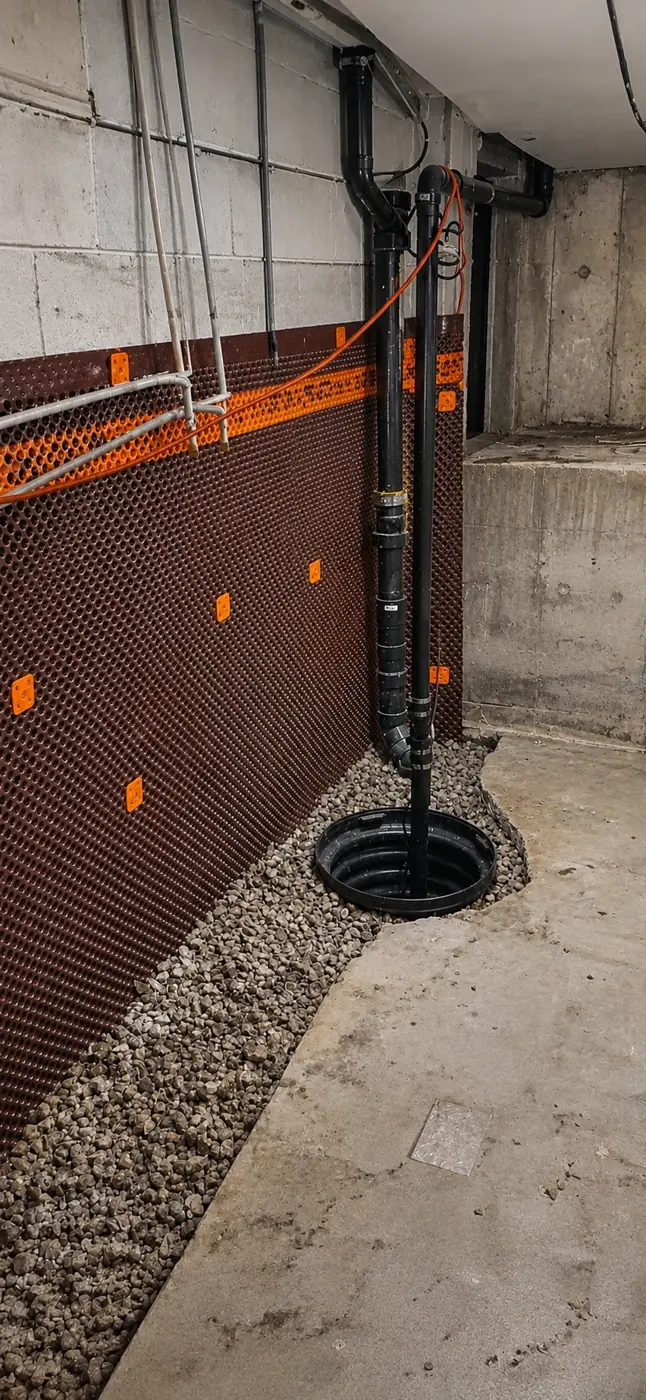
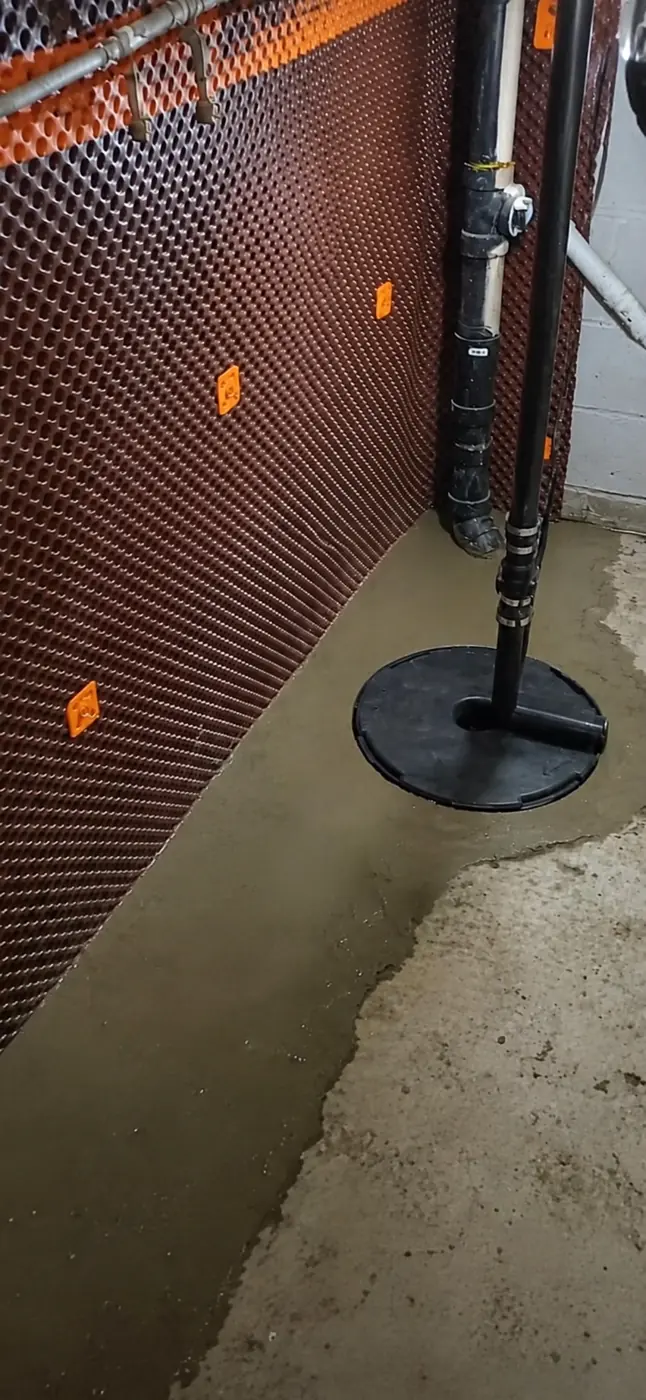
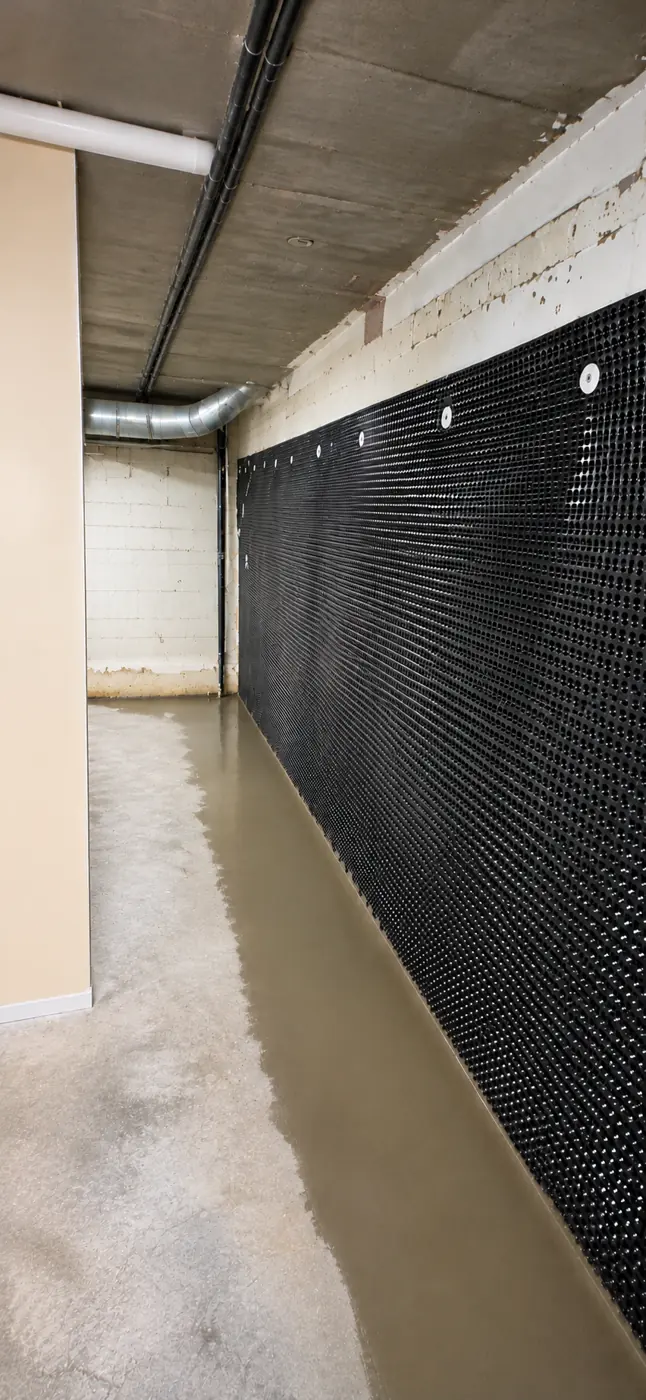
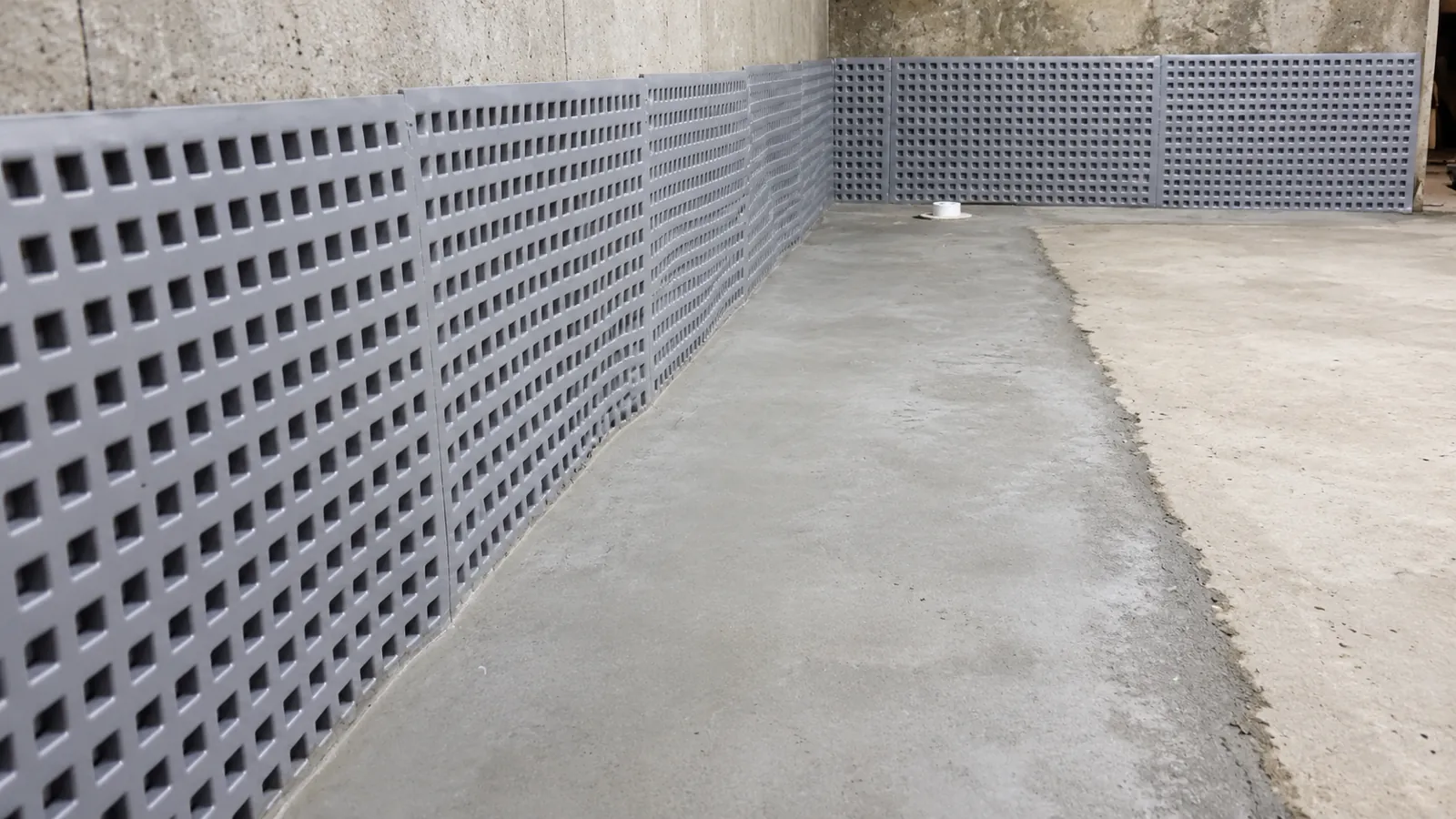
Interior French drain in clean stone, drainage membrane and new sump pit
Written, transferable warranty
An interior French drain with sump pump system installed by Delta is covered by a written 10-year warranty, transferable to the next owner if you sell. Full terms are written in your quote.
FAQ
Questions homeowners ask us
Another question? Call 514 900 0910 — a specialist answers, not a call centre.
How much does interior waterproofing cost in Montreal?
It depends on the length of wall, slab thickness, whether the basement is finished, the cracks to repair and the pump setup. After a free on-site estimate, we give you a detailed written quote.
Why install a membrane if the cracks are repaired?
Foundations keep moving with frost and settling, and new hairline cracks or joints can open over the years. The Delta-MS membrane guides any new seepage down into the drain, so it never reaches your finishes.
Will it stop water coming up through the floor?
Yes — relieving the pressure under the slab stops water from seeping through the floor and the floor-wall joint.
Can you do it in a finished basement?
Yes. We remove only the bottom part of the walls where needed, install the system and close the floor. Your finishes can then be restored.
How much dust and noise is there?
Cutting concrete is noisy, but dust stays where we work: temporary walls, negative pressure, filtered exhaust outside and HEPA vacuums on every tool. You can stay in the house during the work.
How long does the work take?
Most projects take about 5 to 7 days, depending on the length of wall, slab thickness, finishes and pump setup.
Is the work guaranteed?
Yes — an interior French drain with sump pump comes with a written 10-year warranty, transferable to the next owner.
Free on-site estimate
Water coming into your basement? Let’s stop it.
Through the floor, the walls or the floor-wall joint — we find the source and install the system that keeps your basement dry. Send a few photos and we reply within one business day.
RBQ 5762-6723-01 · $5M liability insurance