
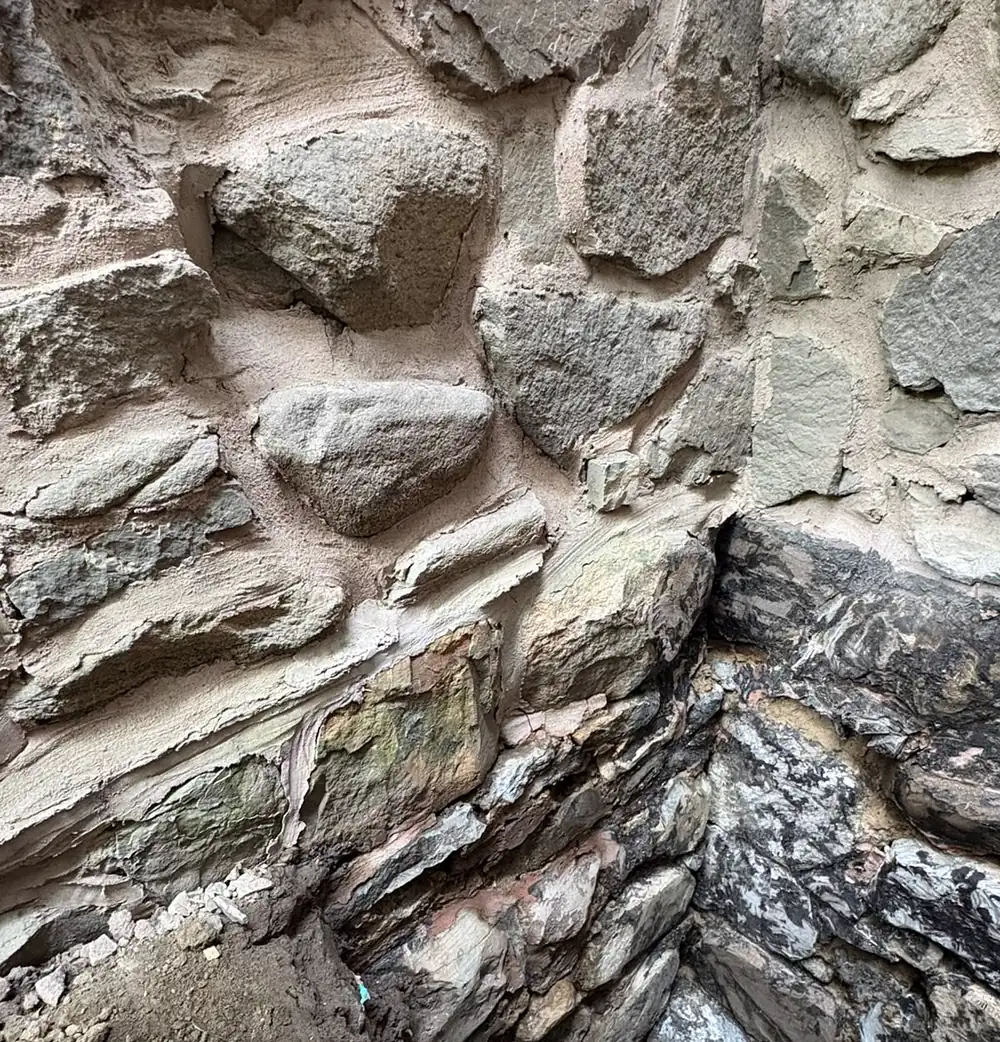
Interior — stone basement
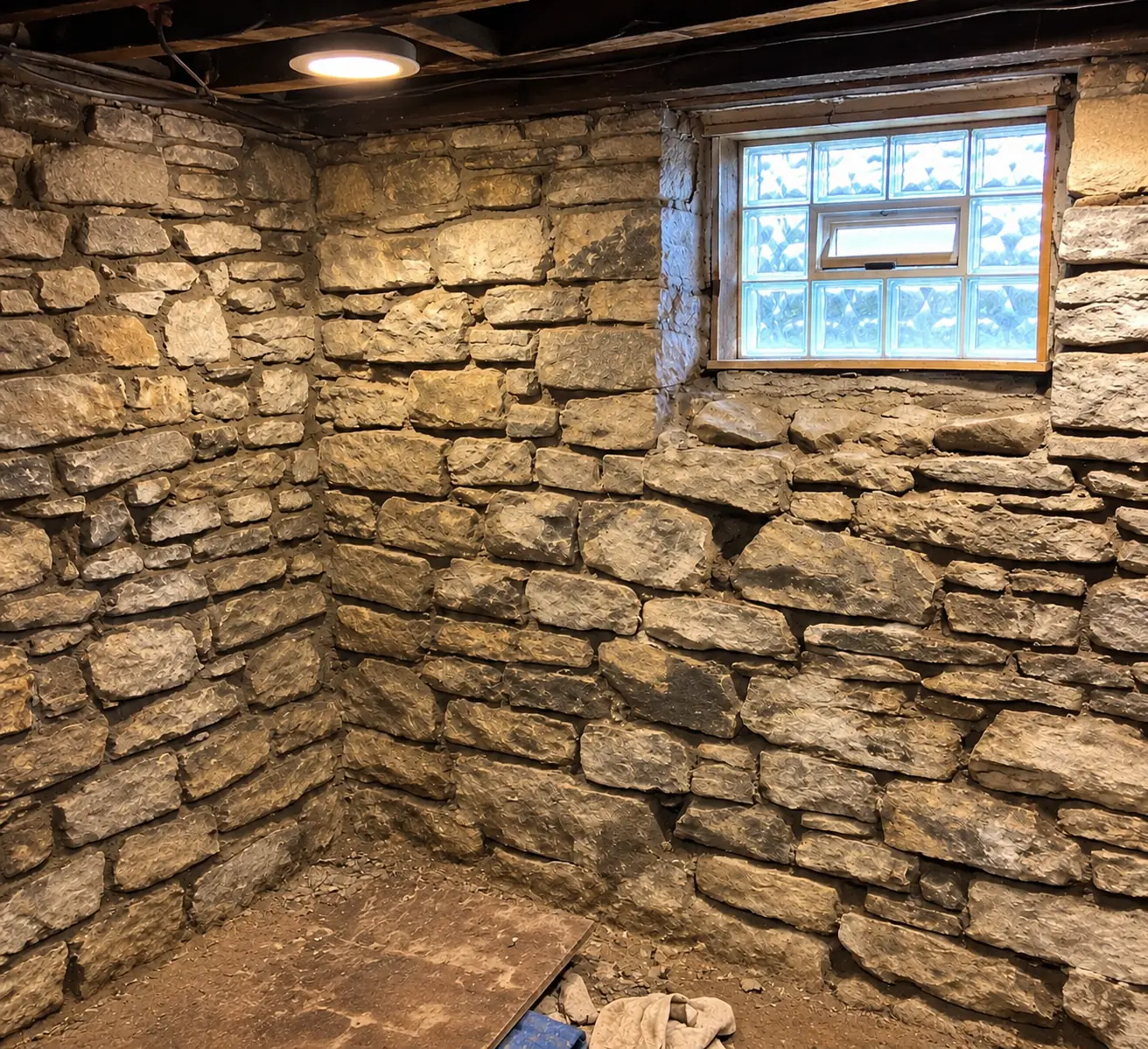
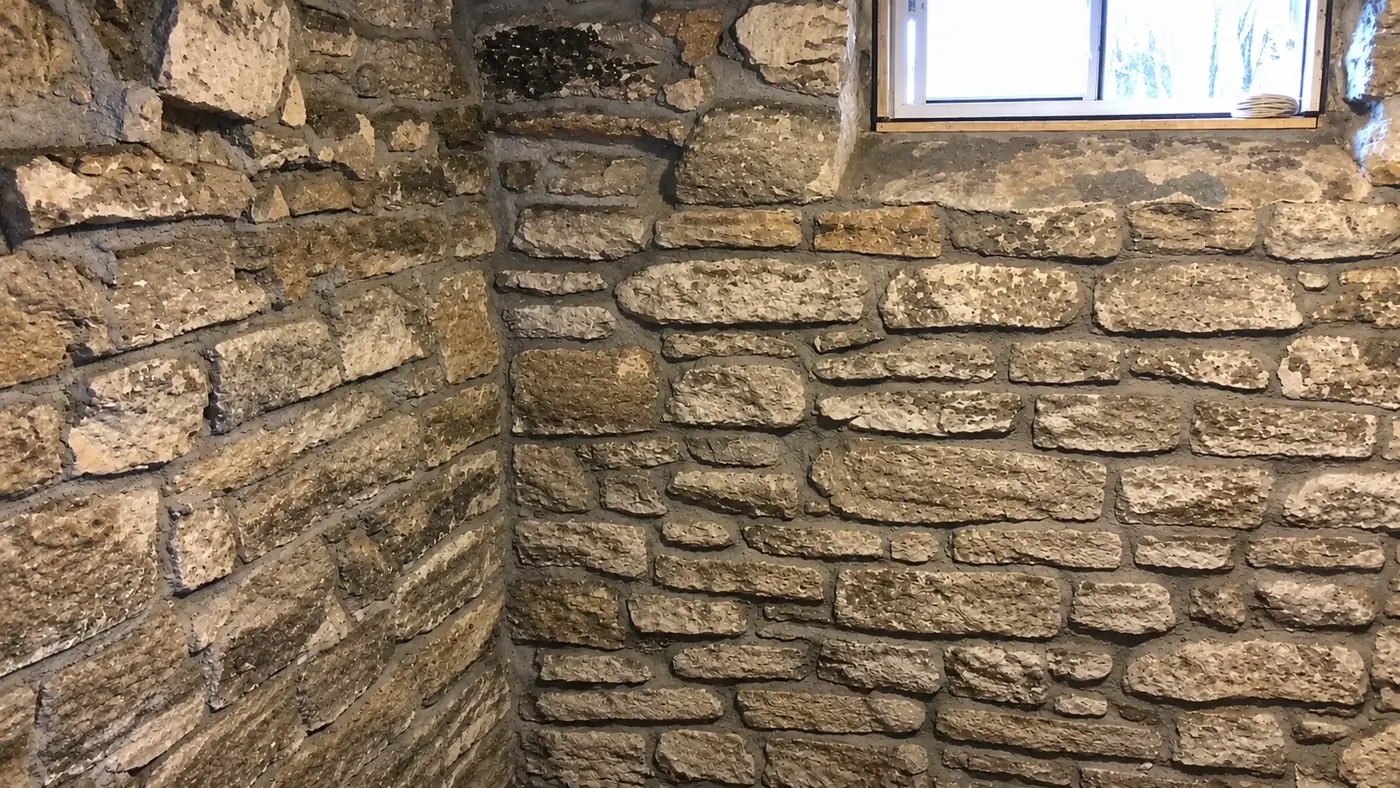
Parging removed, stone exposed and cleaned
Exterior — 1898 church, Dorval
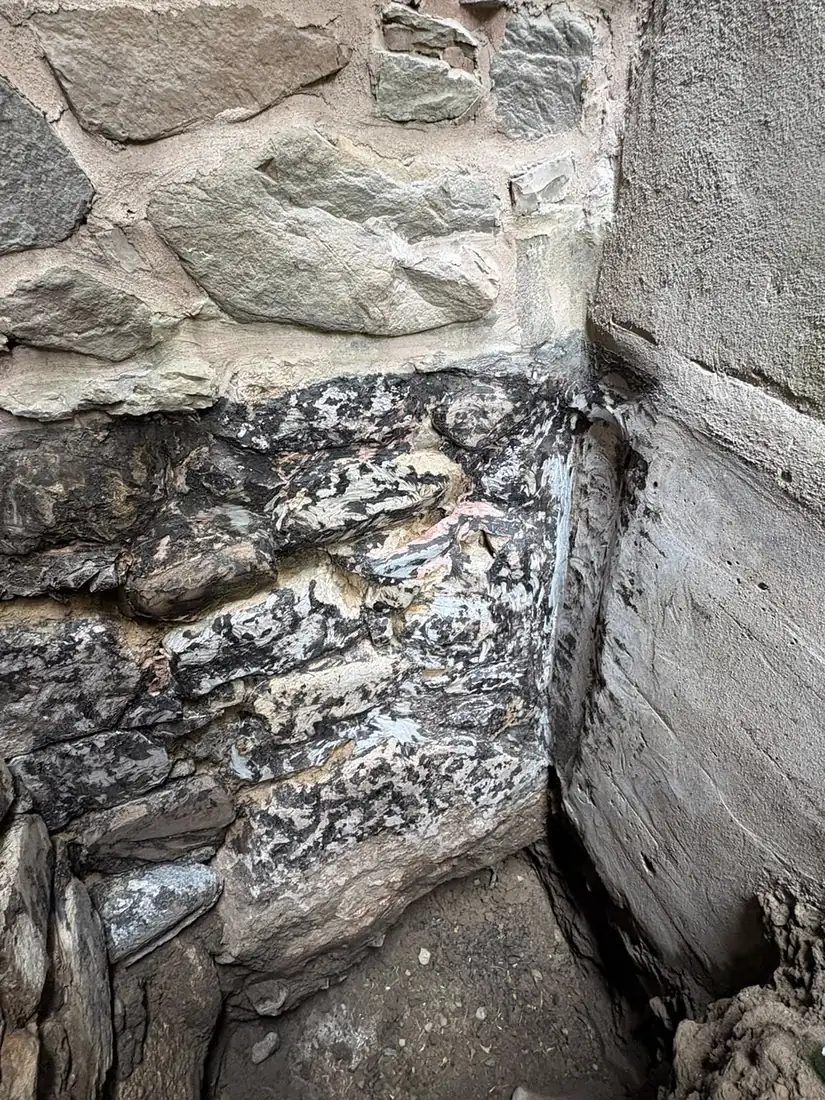
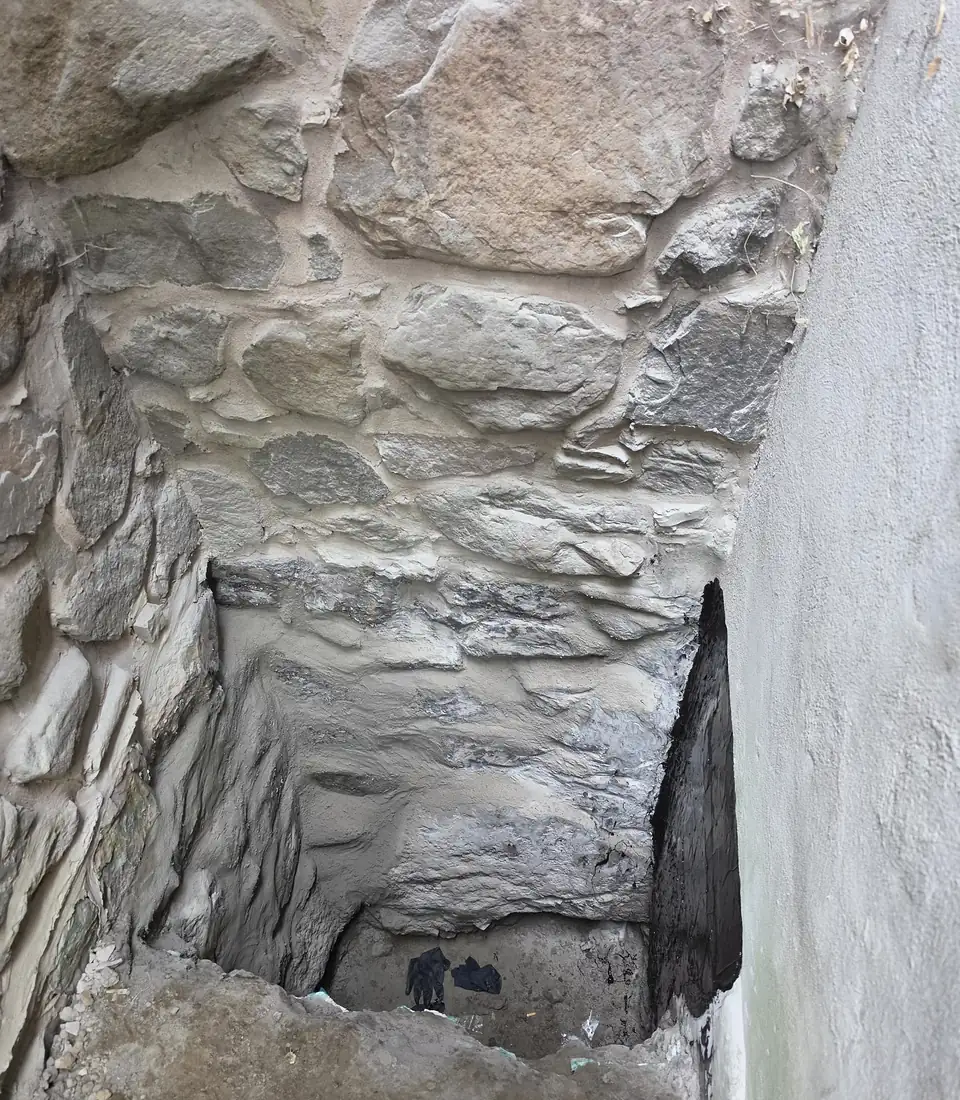
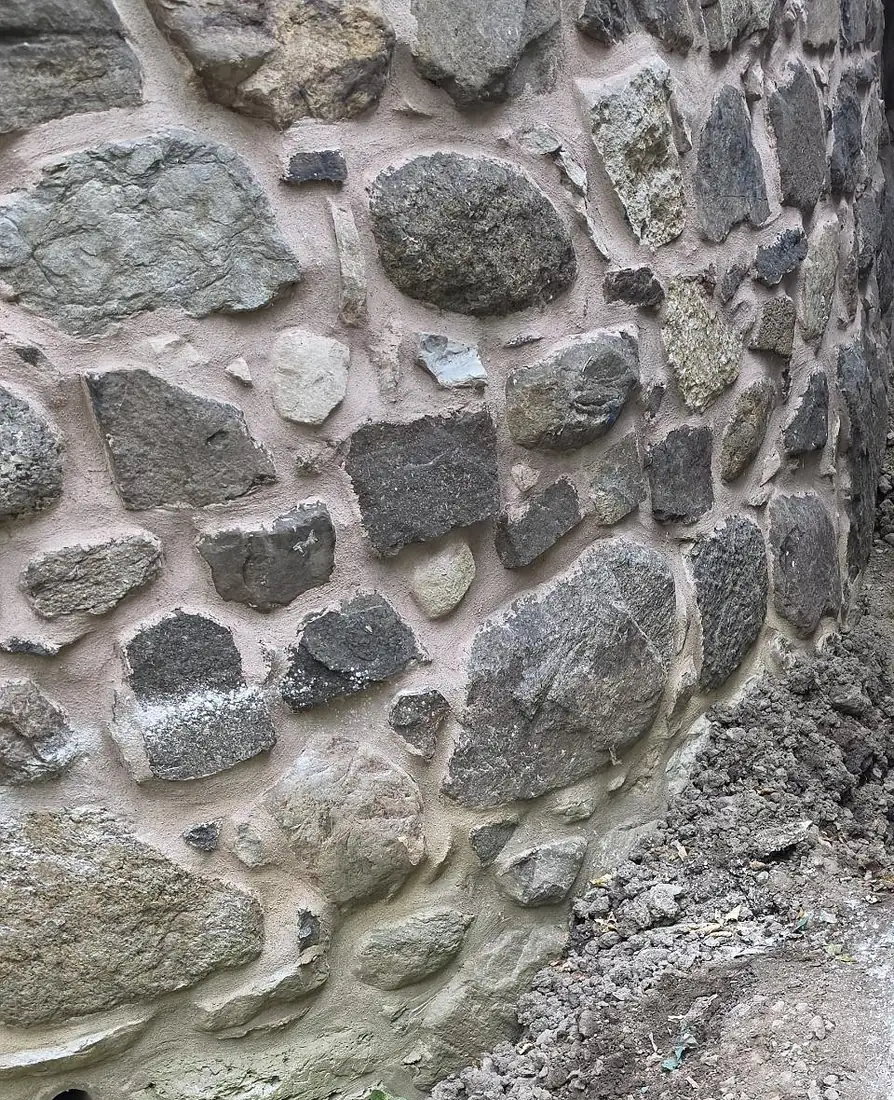
Before: old tar coating and eroded joints below grade
Exterior — repointing
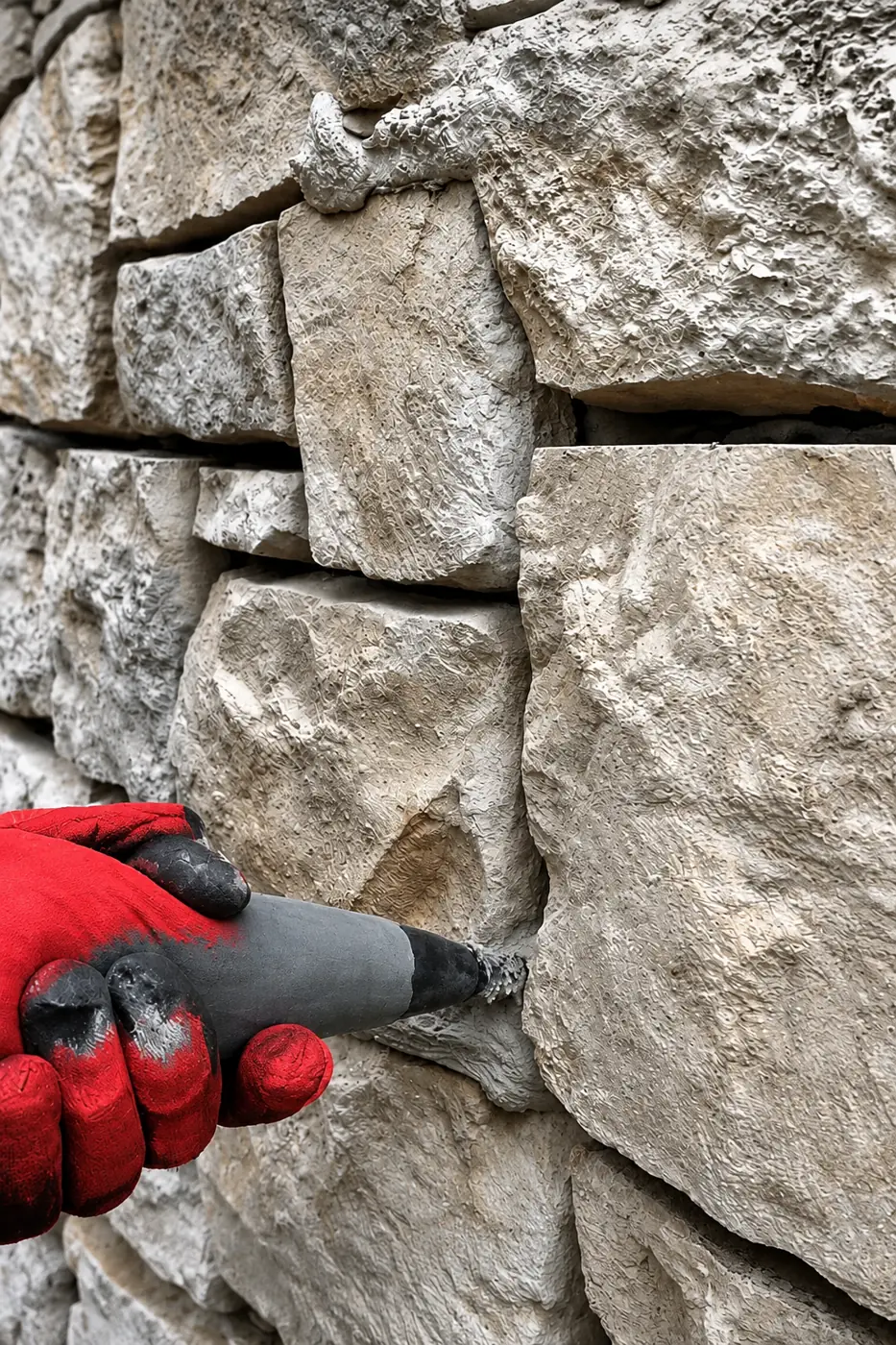
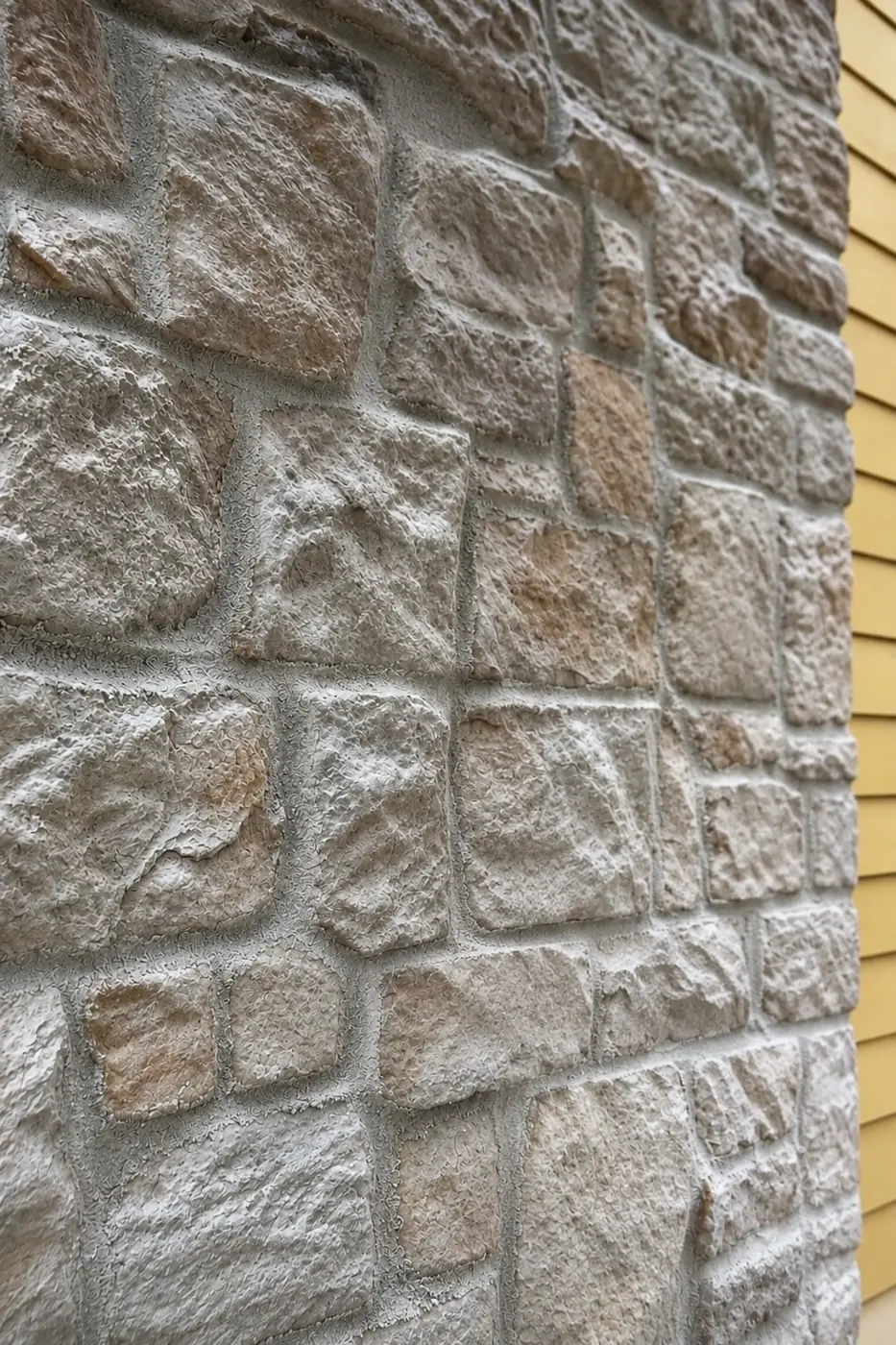
Joints filled with mortar, stone by stone
Why stone needs a different approach
Different centuries. Different construction.
Historic walls hold irregular stones, several layers of masonry, lime mortar and hidden details — and they handle moisture differently from concrete. The wrong repair material, like a hard cement-rich mortar, or the wrong waterproofing can trap moisture and damage the stone it was meant to protect.
That is why we choose methods for each building, never one system for every house.
Common problems in century-old stone foundations
- Crumbling or eroded mortar joints
- Loose, displaced or damaged stones
- Persistent dampness or infiltration
- Bulging or moving walls
- Old repairs with incompatible cement
- Settlement or changes in alignment
None of these automatically means replacement.
Heritage expertise
Four areas of expertise
19th-century foundations
Natural stone, irregular layouts and aging mortar, restored around their original construction.
Churches & heritage buildings
Massive masonry foundations approached with careful planning and controlled methods.
Structural stone restoration
Displaced stones, weak sections and settlement addressed at the cause.
Moisture management
Drainage and protection chosen to work with traditional masonry.
How we work
Our restoration approach
- 01Historic foundation assessmentStonework, deterioration, moisture, age and past repairs.
- 02Custom restoration strategyEngineering, heritage consultation and approvals where needed.
- 03Careful preparation & accessPlanned around the existing structure.
- 04Masonry restorationCompatible materials and methods — lime mortar matched to the stone.
- 05Structural rehabilitationReinforcement or local reconstruction, if required.
- 06Moisture managementDrainage and compatible protection.
- 07Completion & documentationPhotos and records of the work.
From our projects
A church built in 1898
At the Anglican Church of All Saints by the Lake in Dorval, we removed the failing mortar and repointed the 1898 stone foundation with a lime mortar matched to the stone — softer and more breathable than cement — then waterproofed it. On the 1953 concrete addition, we repaired the concrete, waterproofed the walls, installed a new French drain and window wells.
Permits & conservation
Heritage buildings — permits and requirements
A borough permit is required before restoration or excavation work. Buildings with a provincial heritage status may also need an authorization under Quebec’s Cultural Heritage Act. The City of Montréal also offers a subsidy program for restoring certain heritage buildings — eligibility depends on status and type of work.
Preserve what can be preserved. Restore what can be restored. Reconstruct only when necessary.
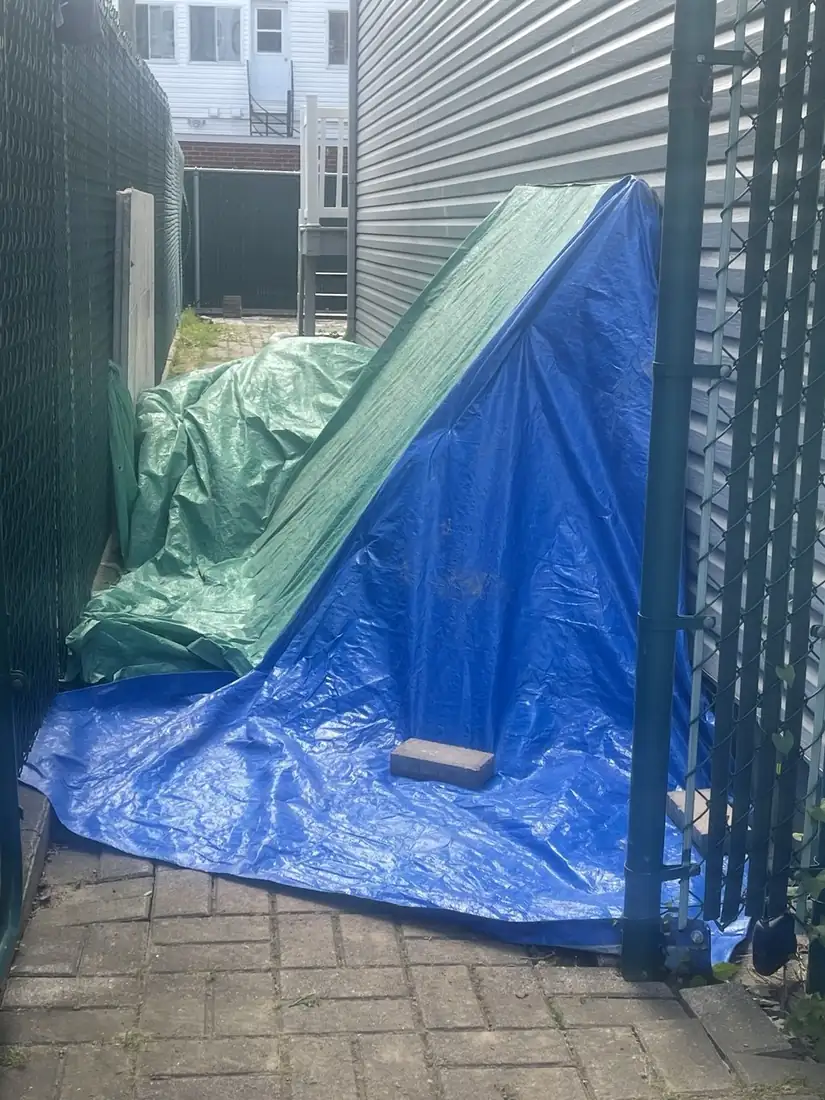
Respect for your property
We protect your yard — and your neighbour’s
- Plywood — on walkways and driveways before any machine moves in
- Tarps — on fences, walls and the neighbour’s side of the property
- Fenced excavation — the open trench is fenced off and kept safe every day
- Clean finish — we leave your yard tidy when the job is done
Why Delta
Why choose Delta Waterproofing
Stone restoration cost in Montreal
Age and construction, condition of stone and mortar, extent of deterioration, movement, access, restoration materials, engineering and heritage requirements, waterproofing and permits. An assessment sets the strategy and quote.
Get the priceFAQ
Stone foundation questions
Related services
Can an 1800s stone foundation be restored?
Yes — many can, when the structure allows.
Restore or replace?
Restoration is usually worth evaluating first; an assessment decides.
Why do mortar joints wear out?
Age, moisture, freeze-thaw, movement and past repairs.
Can modern cement damage old stone?
It can — some cement-rich mortars are too hard and impermeable.
Can a stone foundation be waterproofed?
Yes, with methods compatible with traditional masonry.
Can it be reinforced without replacing it?
Often, with local reinforcement or rehabilitation.
Does heritage work need special permits?
Some buildings need additional municipal or provincial approvals.
Free on-site estimate
Own a historic building?
Tell us about the building and its foundation — we’ll evaluate what can be preserved.
RBQ 5762-6723-01 · $5M liability insurance