
Understanding floor cracks
Why basement floors crack
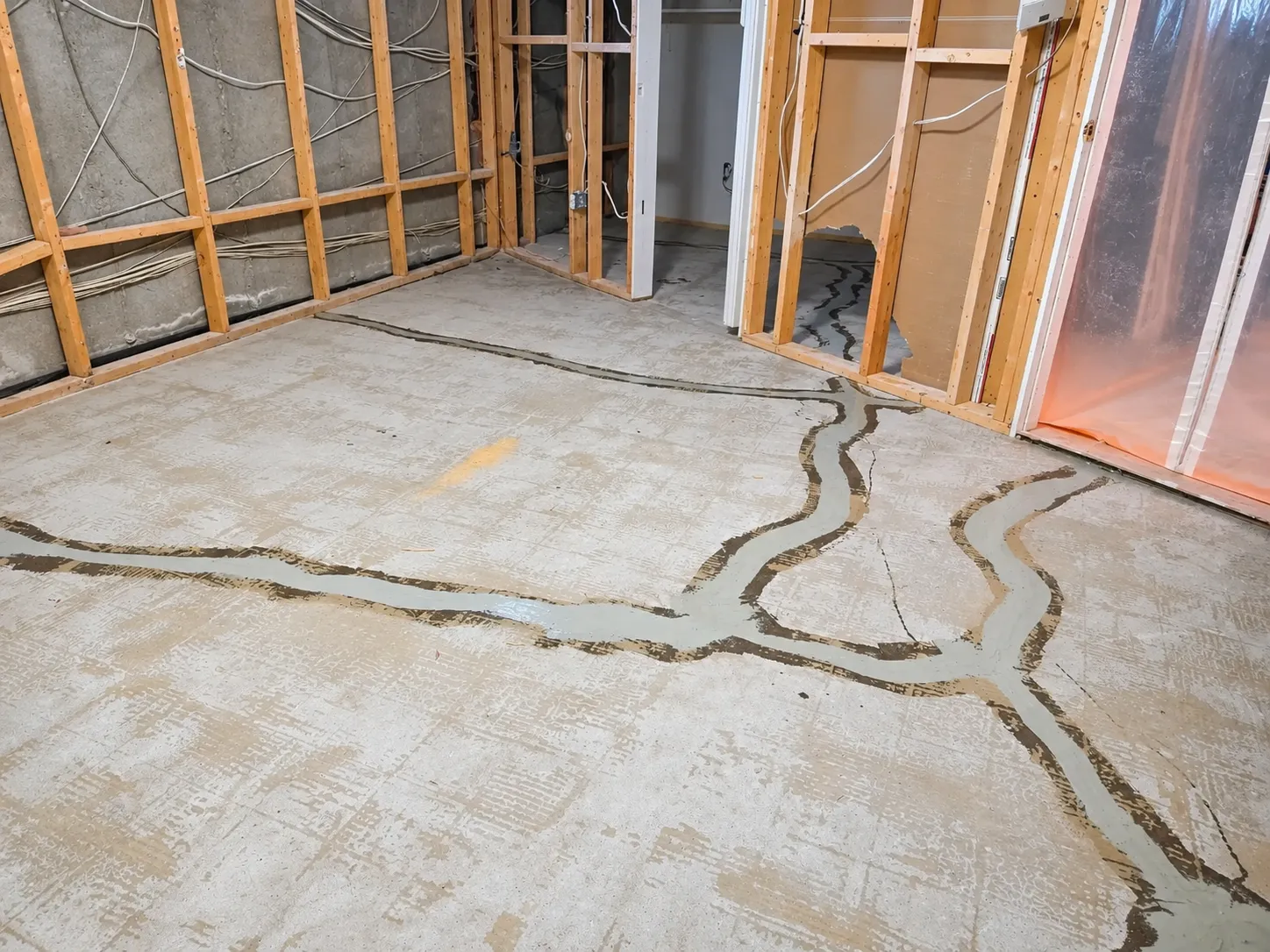
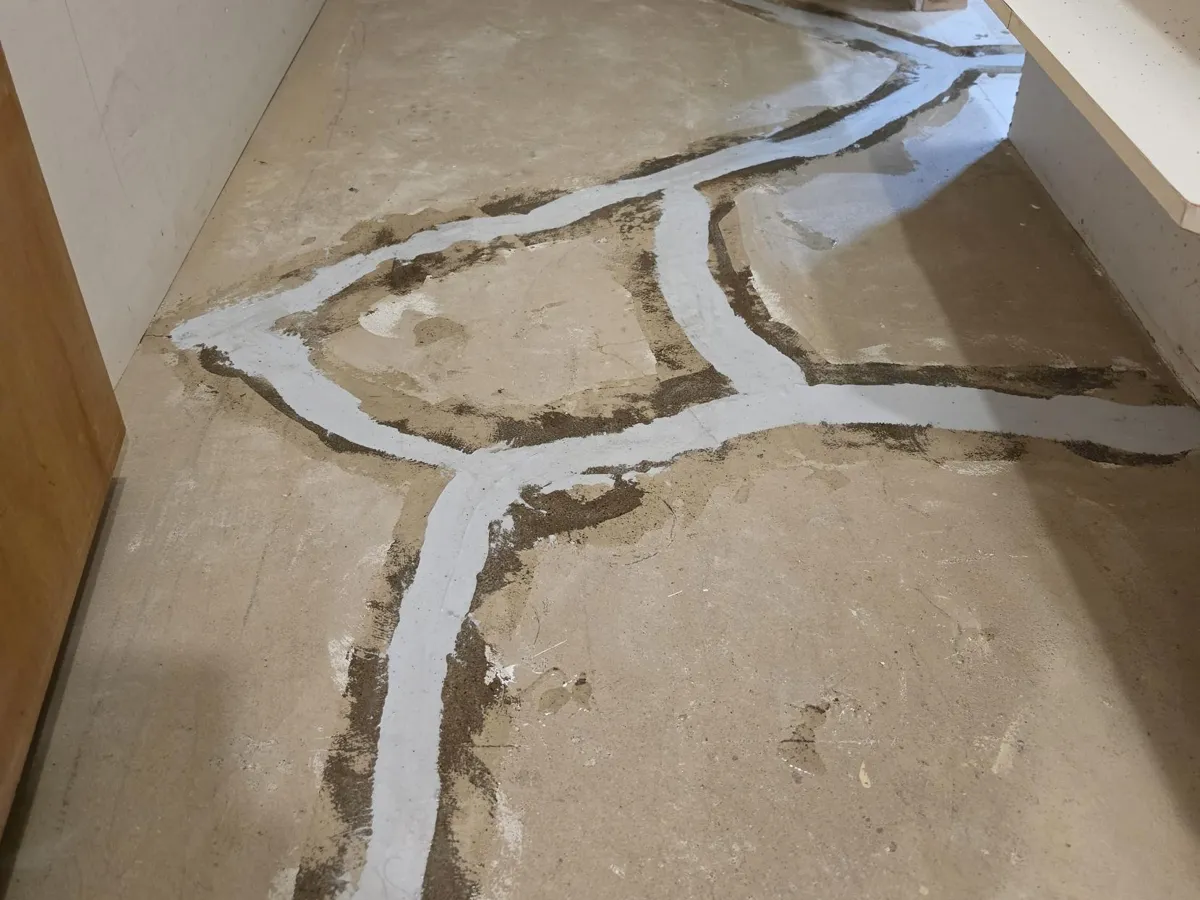
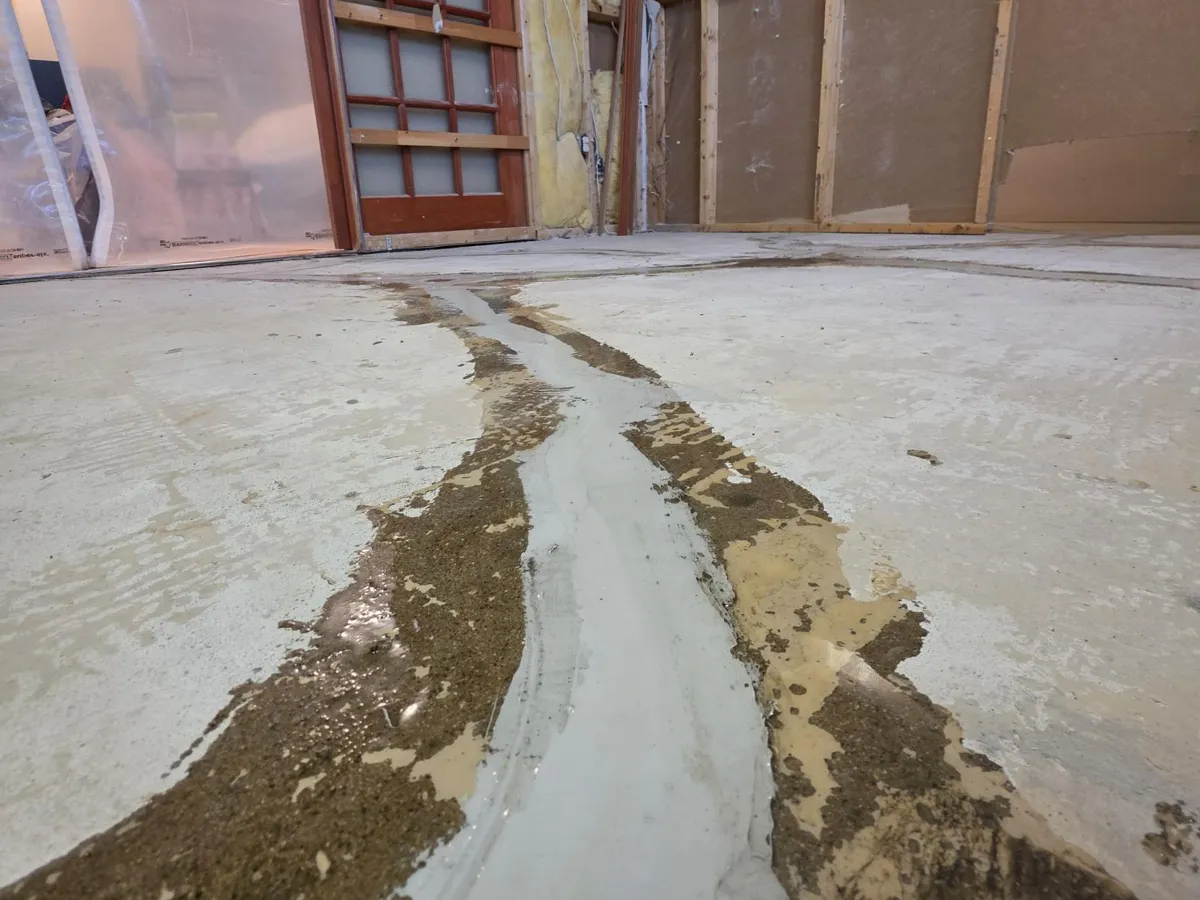
Concrete shrinks as it cures, moves with temperature and settles with the soil beneath it. Some cracks stay at the surface; others go through the slab and let water in.
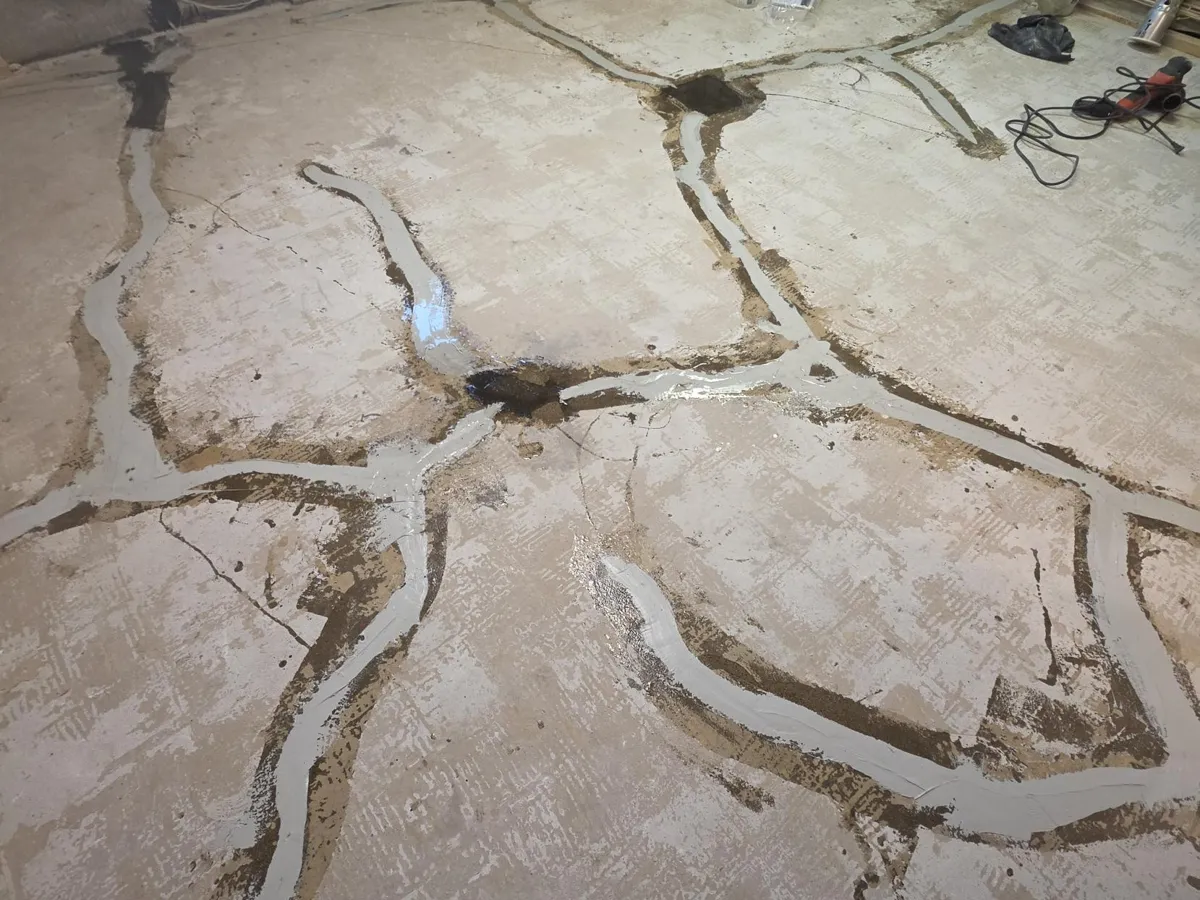
In the Montreal area, a floor that heaves and cracks in a star pattern can point to pyrite in the fill under the slab. Sealing the cracks won’t fix that.
The first step is understanding the crack — not simply filling it.
Five common types
- Shrinkage — narrow, often stable
- Settlement — one side may sit lower
- Structural — loads or restraint
- Water — pushed up from under the slab
- Reopened — wrong material or ongoing movement
A floor that sinks or heaves, or cracks that keep returning, need a structural evaluation first.
Dual technology
Two technologies, one strategy
Structural epoxy
Bonds both sides of a stable crack into one rigid piece again.
Hybrid polyurethane
Seals, adheres to prepared concrete and stays flexible for limited movement.
Chosen for the crack
Width, slab, movement, water and structural needs decide the material.
Mechanical preparation
Opened, cleaned, old fillers removed, moisture checked.
Curing respected
Flooring goes back only after the product’s curing time.
The water too
French drains, sump pumps and waterproofing when the crack is only part of it.
How we work
Assessment. Preparation. Material selection. Repair. Verification.
- 01Floor assessmentThe crack, slab, moisture and movement.
- 02Repair strategyEpoxy, polyurethane or another method.
- 03Crack preparationOpened, cleaned, old repairs removed.
- 04Material applicationPlaced as the product and crack require.
- 05CuringRespected before flooring goes back.
- 06Final reviewPlus drainage advice if needed.
Structural epoxy resin
Rigid bonding for stable cracks
Structural epoxy fills the prepared crack and bonds both sides of the slab, able to transfer forces across the repair. Where movement is expected, a rigid repair can crack again beside it.
High-strength materials. Precision application. Structural repair where appropriate.
Hybrid-modified polyurethane
Flexible sealing
Adhesion to prepared concrete, flexibility for limited movement and tolerance to moisture — within each product’s specifications. Chosen by technical data, not by assuming every polyurethane is the same.
We don’t combine materials without purpose. We select the right technology for each crack.
Floor cracks and groundwater
Find the water source
When water builds up under the slab, it pushes through cracks — and very often the joint between floor and wall. A local repair closes one entry point; with high water pressure, the answer is a drain, a sump pump or interior waterproofing.
Repairing the crack is important. Understanding the water source is essential.
Know the limits
When it’s not a crack problem
Epoxy does not fix poor soil support or ongoing settlement — those may need stabilization or a new slab. A heaving floor may be pyrite.
A professional repair begins before the resin is applied.
Why Delta
Why choose Delta Waterproofing
Floor crack repair cost
Length, width and depth, the slab, access, active water, bonding or sealing, materials, previous repairs and any drainage. A free assessment gives you a written quote.
Get the priceFAQ
Floor crack repair questions
Related services
Are cracks in a basement floor normal?
Fine shrinkage cracks are common. Cracks with water, displacement or growth should be checked.
Can it be repaired without replacing the slab?
Yes — most cracks can, with the right material and preparation.
Epoxy or polyurethane — what’s the difference?
Epoxy bonds stable cracks rigidly; polyurethane seals and stays flexible.
Can a floor crack let water in?
Yes — when water pressure builds under the slab. The floor-wall joint often leaks too.
Will a repaired crack reopen?
Not if the cause has stopped and the material fits. Ongoing settlement can reopen any repair.
Can you repair it while water is coming in?
Some systems tolerate moisture; with strong pressure, drainage is needed too.
When can I put flooring back?
After the product’s curing time — we tell you exactly when.
Free on-site estimate
A crack in your basement floor?
Send us a photo of the crack — or book a free on-site assessment.
RBQ 5762-6723-01 · $5M liability insurance