
Water, ground moisture, humid air
Three different problems, one system
Waterproofing stops liquid water through walls, joints, cracks or the soil — with repairs, drainage and a sump pump.
Encapsulation stops water vapor rising from bare soil — with vapor-control layers and sealed connections. Dehumidification controls the moisture left in the air. When all three are present: water first.
Waterproofing controls water. Encapsulation controls ground moisture. Dehumidification controls the air.
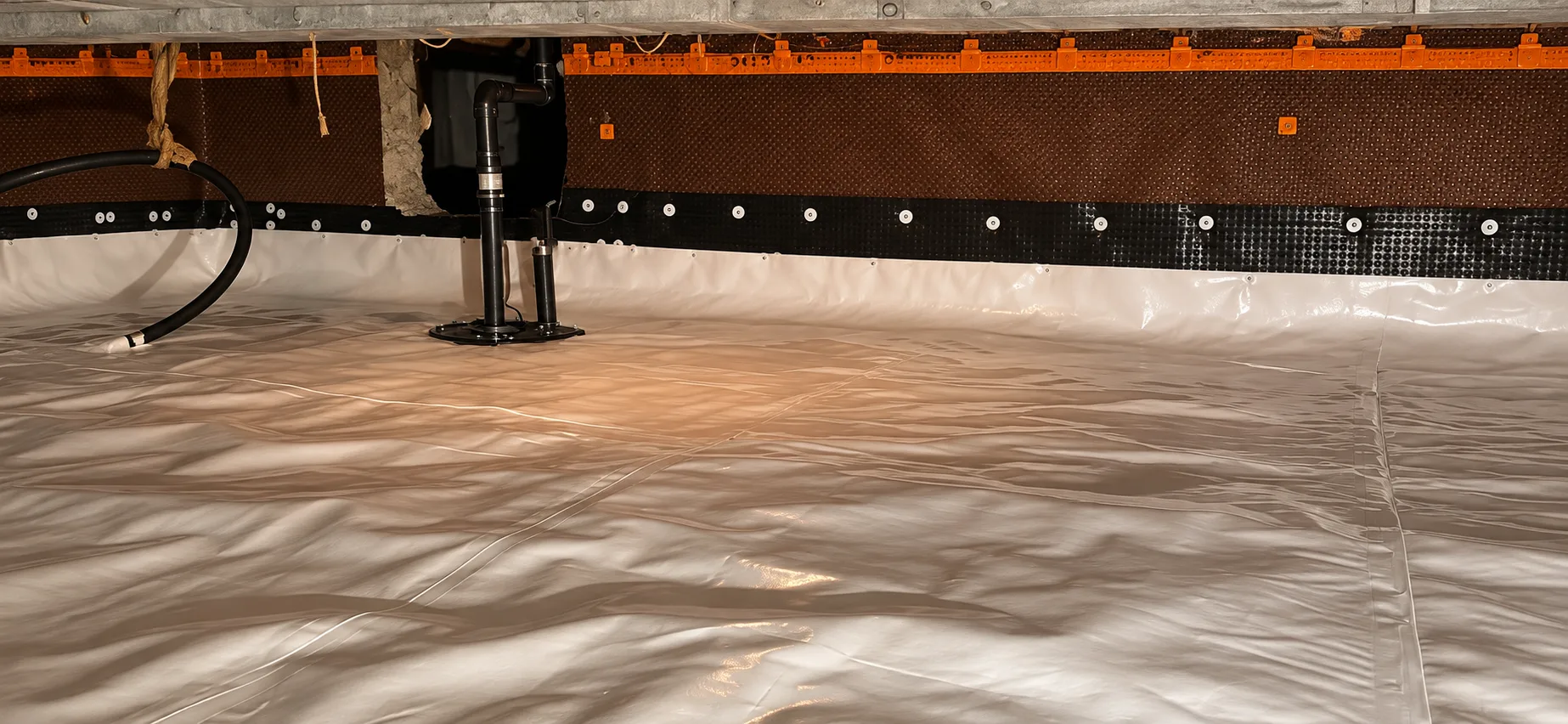
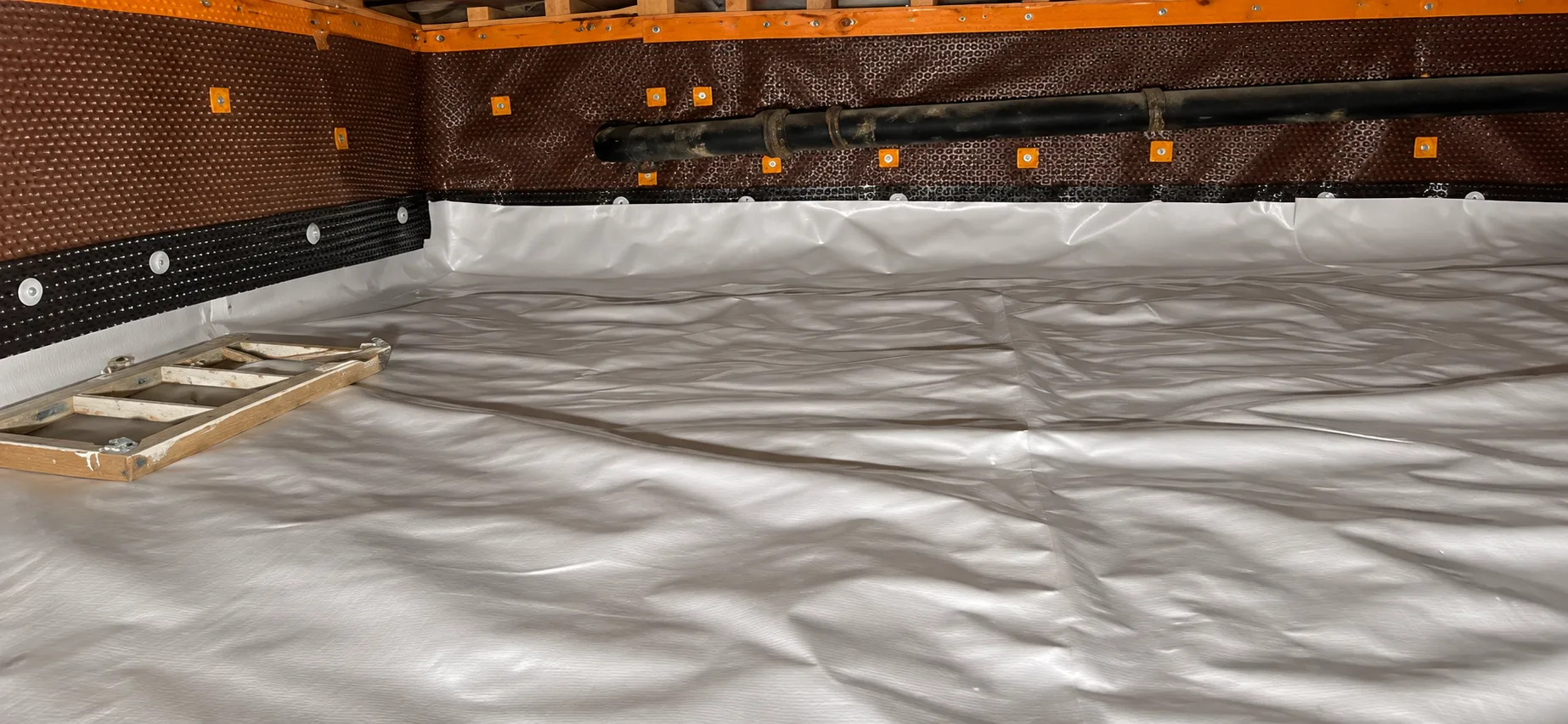
Three-layer encapsulation
- Layer 1 — prepared ground & protective base
- Layer 2 — additional ground protection
- Layer 3 — heavy-duty 20-mil vapor barrier
- Sealed overlaps and perimeter
- Sealed pipes, posts and penetrations
More than a standard plastic sheet: each layer has its own job.
The Delta difference
Six things we do differently
20-mil membranes
About 0.508 mm — over three times thicker than common 6-mil plastic.
Three layers
Ground protection and vapor control are separate jobs.
Water first
Cracks, drainage and a sump pump before any membrane.
Preparation
Debris, damaged materials and mould removed; ground levelled.
Humidity, sized right
A dehumidifier selected for your crawlspace — not the largest one.
Every wall type
Concrete, block and old stone — each with compatible methods.
How we work
Assessment. Water. Encapsulation. Humidity control.
- 01AssessmentFoundation, soil, water, humidity and vents.
- 02Protection strategyWaterproofing, drainage, encapsulation and air.
- 03Home protectionFloors covered, corridor where needed.
- 04Cleanup & preparationThe space emptied and levelled.
- 05Water & foundationCracks, drainage, sump pump.
- 06Ground protectionThe first two layers.
- 0720-mil vapor barrierSealed seams, perimeter and penetrations.
- 08Humidity control & reviewDehumidifier or ventilation where needed; area cleaned.
The 20-mil vapor barrier
Thickness matters — installation more
Heavy-duty membranes resist punctures and tears when people crawl over them for inspections and repairs. But material, vapor permeance, seams and installation matter as much as thickness: overlaps, compatible seam tape, the perimeter, pipes and posts.
A vapor barrier performs only as well as the entire system is installed.
Water first
A vapor barrier is not drainage
Laid over active water, a membrane just hides it. Before encapsulation: crack and joint repair, wall waterproofing, a crawlspace drain and a sump pump where gravity drainage isn’t possible.
The right encapsulation system begins with proper water management.
Prepared space, protected home
Professional preparation
Encapsulation isn’t installed over debris, damaged materials or mould. We clean and prepare first — and protect your floors on the way in, with an enclosed corridor from the hatch to the exit.
Encapsulation + dehumidification
Ground moisture vs. air moisture
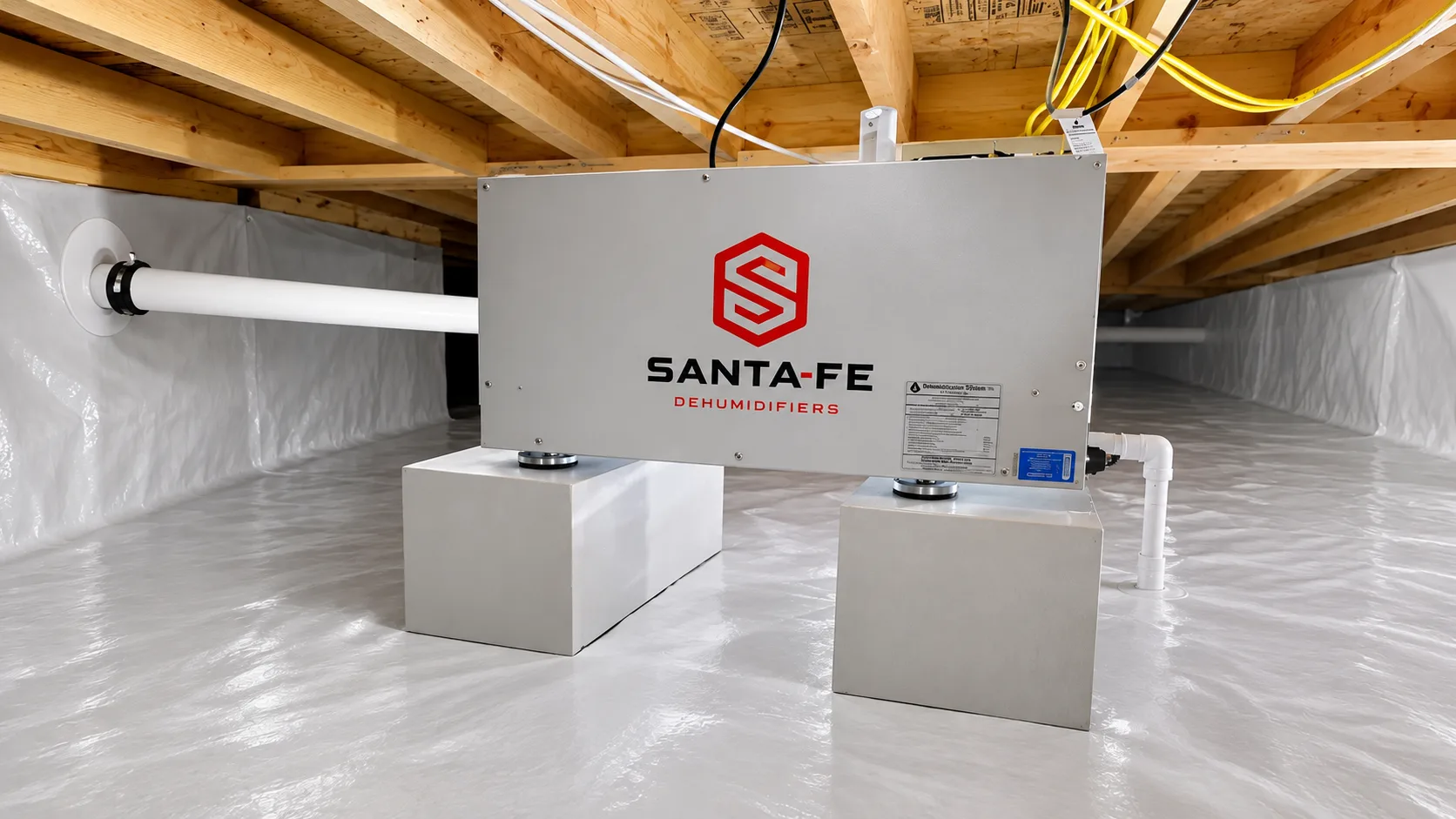
A vapor barrier cuts the biggest moisture source — ground moisture — but not the moisture already in the air. Many encapsulated crawlspaces get a dedicated dehumidifier: continuous drainage to a drain or the sump pit, humidistat control, automatic defrost, built for cool spaces.
We size it from the volume, the moisture load and the crawlspace temperature through the year. The “pints per day” on the box is measured in test conditions; a cool crawlspace removes less.
Encapsulation reduces ground moisture. Dehumidification controls moisture in the air.
The equipment we install
Santa Fe dehumidifiers and air systems

After encapsulation, we install and set up Santa Fe dehumidifiers — equipment designed for crawlspaces and basements by an American manufacturer based in Madison, Wisconsin.
Where the house also needs fresh air, we install a Santa Fe system that combines dehumidification, outdoor-air ventilation and MERV 13 filtration in one unit.
- Models sized for crawlspaces and basements
- Continuous drainage to a drain or the sump pit — nothing to empty
- Humidistat control, optional remote humidity sensor
- 6-year manufacturer warranty
- Installed, configured and checked by our crew
Why more ventilation is not always better
Dew point, explained
Warm air holds a lot of water vapor. As it cools in a crawlspace, its relative humidity rises; at the dew point, it condenses on joists, pipes and insulation. Montreal summers are hot and humid — exactly when open vents bring water into a cool crawlspace.
Ventilation helps only when the incoming air is drier. Where it does, we install exhaust or supply ventilation with ducting and controls — without creating pressure problems, soil gas or interference with combustion appliances.
The goal is not maximum airflow. The goal is appropriate moisture control.
Three layers of protection, the right humidity control. One professionally installed system.
Why Delta
Why choose Delta Waterproofing
Crawlspace encapsulation cost
Size and height, access, ground preparation, water, drainage or a sump pump, encapsulation materials, detailing, home protection, and any dehumidifier, ventilation, condensate drainage or electrical work. A free assessment gives you a written quote.
Get the priceFAQ
Crawlspace waterproofing questions
Related services
Is waterproofing the same as encapsulation?
No. Waterproofing stops liquid water; encapsulation controls water vapor. Many crawlspaces need both.
What is a 20-mil vapor barrier?
About 0.508 mm thick — over three times thicker than 6-mil plastic, and much tougher.
Why three layers?
Ground protection and vapor control are different jobs; each layer has its own.
Does a vapor barrier stop groundwater?
No. Active water needs drainage, waterproofing or a sump pump first.
Does an encapsulated crawlspace need a dehumidifier?
Often, yes — encapsulation stops ground moisture, not every source.
Should vents stay open after encapsulation?
Usually not — humid summer air condenses in a cool crawlspace. It depends on the building and the system.
Do I have to empty the dehumidifier?
No. Professional units drain continuously to a drain or the sump pit.
Will encapsulation stop mould and musty smells?
Less moisture means less mould and odour; existing mould needs separate removal.
Can it be done without a concrete slab?
Yes. Encapsulation goes over prepared ground.
Free on-site estimate
A damp, musty crawlspace?
Send us a few photos of the crawlspace — or book a free on-site assessment.
RBQ 5762-6723-01 · $5M liability insurance