
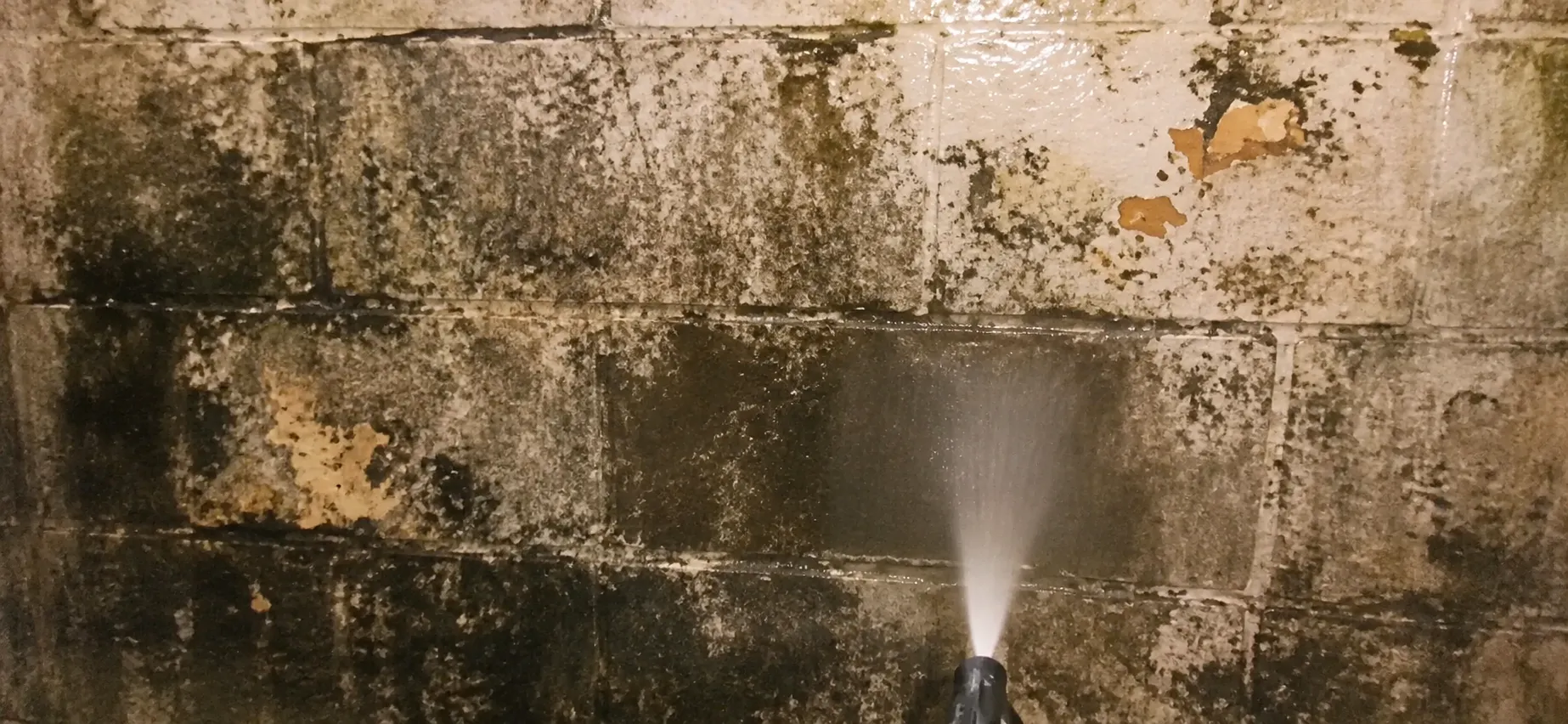
Why mold grows in cold rooms
Cold concrete, little air, water from above
Warm, humid air hits a ceiling or wall below its dew point and turns to water. Cracks, joints and worn waterproofing in the stairs above let rain and snowmelt in.
Concrete itself doesn’t feed mold — but the dust, coatings and stored items on damp concrete do.
We understand the concrete structure above the cold room — not just the mold beneath it.
Six causes
- Condensation on cold concrete
- Leaks through the stairs above
- Unsuitable ventilation
- Wrong insulation or vapor barrier
- Foundation cracks and joints
- Damp cardboard, wood and fabrics
Identifying the moisture source is essential to stop mold coming back.
Decontamination
A controlled process
Assessment
Contamination, moisture and the concrete above.
Containment & protection
Room contained; basement floors and route covered.
Removal
Materials that can’t be cleaned are removed.
Surface cleaning
Concrete and masonry cleaned with suitable methods.
HEPA filtration
Vacuuming and filtration where the plan requires.
Targeted treatment
Antimicrobial only as a supplement to cleaning.
How we work
Assessment. Protection. Removal. Cleaning. Moisture correction.
- 01InspectionSurfaces, contamination, the concrete above.
- 02Moisture sourcesCondensation, leaks, cracks, humidity.
- 03ProtectionFloors and route covered, room contained.
- 04Removal & cleaningMaterials removed, surfaces cleaned, HEPA.
- 05Targeted treatmentWhere suitable, as a supplement.
- 06Moisture correctionWaterproofing, concrete repair or ventilation; final cleaning.
Under the concrete front steps
The leak comes from above
The stairs over the cold room face rain, snow, freeze-thaw and salt. They crack, joints open, the waterproofing fails — and water shows up on the ceiling. We repair cracks and joints, waterproof the structure, or rebuild the stairs and waterproof the slab over the cold room.
Why spraying alone is not enough
Cleaning first, treatment second
Sprays and household cleaners don’t remove contamination or fix the moisture. Removal takes contamination off; treatment adds targeted products; decontamination adds containment; remediation is the whole job — including the moisture.
Professional mold decontamination is a controlled process — not simply the application of a chemical product.
Condensation & humidity
Not just a fan or more insulation
A cold room is meant to be cool. Humid air can increase condensation, and insulation installed without understanding vapor movement can trap water. We recommend what fits the room’s construction and use.
Effective humidity control begins with understanding the building.
We don’t just remove mold. We address the moisture behind it.
Why Delta
Why choose Delta Waterproofing
Cold room mold removal cost
Room size, contamination, surfaces, access, containment, removal, cleaning and HEPA, treatment, leaks and any concrete or waterproofing repairs. A free assessment gives you a written quote.
Get the priceFAQ
Cold room mold questions
Related services
Why is mold growing in my cold room?
Condensation on cold concrete, leaks from the stairs above, humidity or damp stored items.
Can mold grow on concrete walls?
Not on concrete itself — on the dust, coatings and organic material on damp concrete.
Is antifungal spraying enough?
No. Physical cleaning and fixing the moisture come first.
Should I add ventilation?
Not automatically — humid air can make condensation worse.
Can you fix the leak from the stairs?
Yes — crack repair, joint and exterior waterproofing, or rebuilding the stairs.
Will waterproofing stop condensation?
No — it stops leaks. Condensation needs humidity and temperature control.
Do you replace insulation?
When it’s contaminated or damaged — after remediation and drying.
Free on-site estimate
Mold in your cold room?
Send us a photo of the ceiling and the stairs above — or book a free on-site assessment.
RBQ 5762-6723-01 · $5M liability insurance